AI Agents Are Writing Smart Contracts Now. Here's What That Means for Your Crypto Portfolio

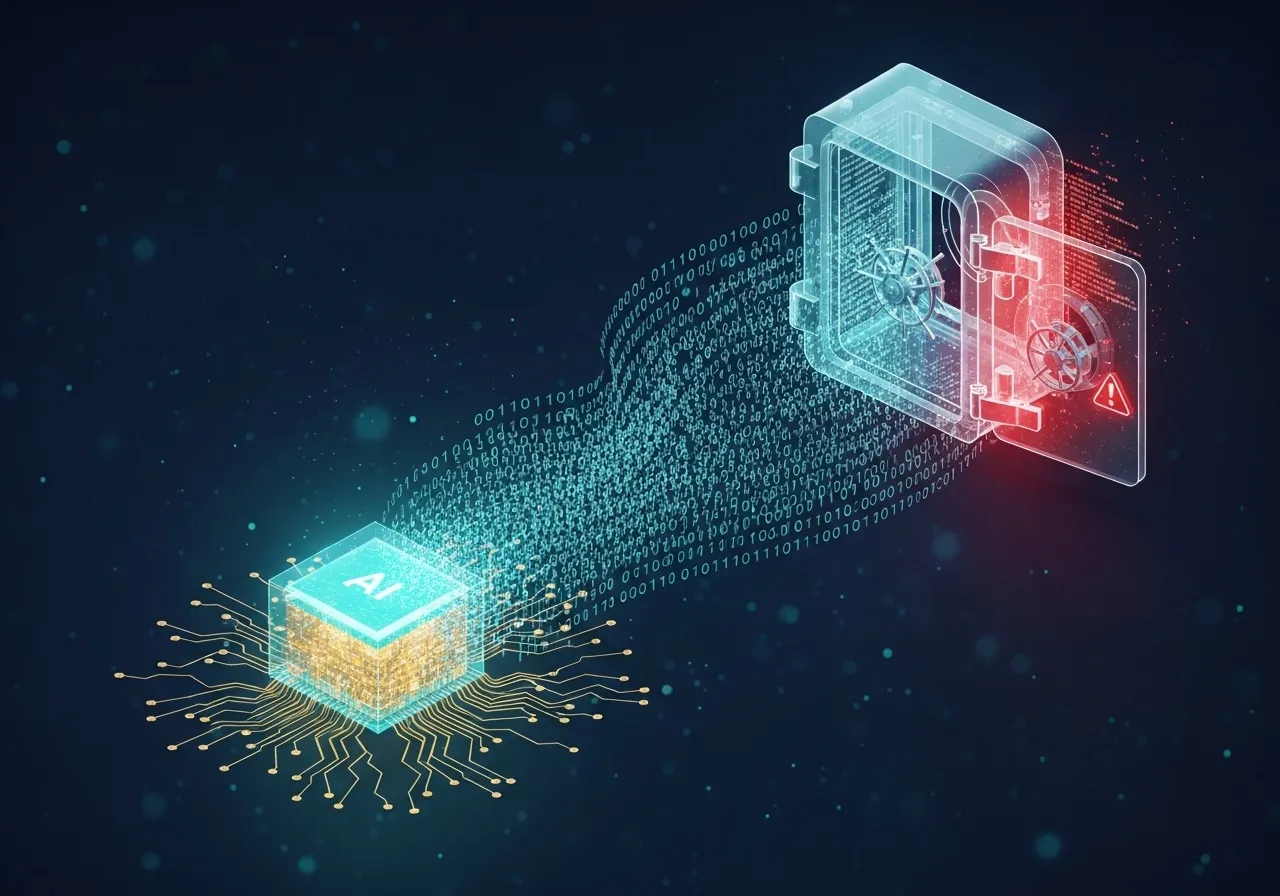
In 2026, AI agents autonomously write, audit, and manage smart contracts. This boosts DeFi efficiency but creates new risks, as the same tech can exploit bugs or be manipulated at the reasoning layer.
Smart contracts were always supposed to be trustless. No middlemen. No human discretion. Code runs, conditions are met, funds move. That was the promise.
But there was always a quiet assumption underneath that promise: that a human being wrote the code. A developer sat down, understood the logic, tested the edge cases, and signed off before anything went live on mainnet. That assumption is being dismantled right now.
AI agents are no longer just helping developers write faster. In 2026, they are autonomously generating Solidity contracts, running security audits on their own output, deploying those contracts to testnets, and in some cases executing on-chain transactions without a human approving every step.
In 2023, AI helped developers write snippets of Solidity. In 2024, it moved into generating entire decentralized applications. Now in 2025 and into 2026, AI agents are not just assisting developers but autonomously writing, auditing, and testing smart contracts before developers even open their IDE.
That is a meaningful shift. Not a marketing claim. Not a whitepaper promise. A shift in what is actually happening on the development pipeline of projects that will hold your money.
If you invest in DeFi protocols, hold tokens tied to on-chain applications, or stake assets in any smart contract-based product, this development affects you directly. The question is whether it affects you for the better or the worse, and the honest answer right now is: both.
Quick Intelligence: The AI Agent Shift
- Autonomy is the New Standard: In 2026, AI has moved from "suggesting" code to independently writing, auditing, and deploying smart contracts.
- The Dual-Use Dilemma: The same frontier models (GPT-5, Sonnet 4.5) used to build protocols are now capable of finding and exploiting zero-day vulnerabilities.
- Portfolio Impact: $62B+ in volume is already managed by "Agentic Wallets." If you hold yield-bearing assets, an AI agent likely controls your risk parameters.
- Due Diligence 2.0: Traditional audits aren't enough. Investors must now verify "Circuit Breakers" and human-in-the-loop constraints on autonomous activity.
What an AI Agent Actually Does in a Smart Contract Pipeline
Before getting into the portfolio implications, it helps to understand what these agents are actually doing, because the term "AI agent" gets stretched to cover everything from a glorified autocomplete tool to a genuinely autonomous system making decisions with financial consequences.
A traditional AI code assistant, like GitHub Copilot, responds to prompts. You ask, it suggests. You decide whether to use the suggestion. An AI agent is different. Unlike traditional AI code assistants, AI agents operate autonomously. They understand goals, not just commands. They can interact with blockchain testnets and mainnets, run security audits without needing a human prompt, and communicate results in plain English.
In practice, a modern smart contract development workflow involving AI agents looks like this: a developer or protocol team describes what they want to build in plain English.
The agent parses that into a functional specification, generates optimized Solidity or Vyper code, and then, before any human reviews it, runs the output through automated security tools including Slither, Mythril, and Echidna. If vulnerabilities are found, the AI fixes them iteratively until all tests pass.
Some development pipelines now run multi-agent teams: one agent writes code, one agent tests it, one agent optimizes gas consumption, and one agent deploys and monitors on-chain behavior.
That is a complete software engineering workflow running on autopilot. The speed benefits are real. Audit costs have dropped 20 to 40 percent since AI-generated code tends to be cleaner on arrival, and projects are launching weeks earlier than they would under traditional timelines.
That speed and cost reduction matter for the crypto ecosystem because it lowers the barrier to launch. Projects that previously could not afford a full audit cycle can now build faster. That sounds like progress. And it is, with a significant asterisk.
The Other Side of This: AI Agents Can Also Break Smart Contracts
Here is where the picture gets more complicated, and where retail investors especially need to pay attention.
The same capabilities that let an AI agent write a smart contract also let one find and exploit vulnerabilities in existing contracts. Researchers at Anthropic and MATS studied this directly. On contracts exploited after the latest model knowledge cutoffs, Claude Opus 4.5, Claude Sonnet 4.5, and GPT-5 developed exploits collectively worth $4.6 million, establishing a concrete lower bound for the economic harm these capabilities could enable.
That benchmark is not theoretical. The researchers evaluated AI agents against real contracts with real historical vulnerabilities, measured in actual dollar value of simulated stolen funds.
Going beyond retrospective analysis, researchers evaluated both Sonnet 4.5 and GPT-5 in simulation against 2,849 recently deployed contracts without any known vulnerabilities. Both agents uncovered two novel zero-day vulnerabilities and produced exploits worth $3,694, with GPT-5 doing so at an API cost of $3,476. This demonstrates as a proof-of-concept that profitable, real-world autonomous exploitation is technically feasible.
The implication is uncomfortable but important: the same frontier models being used to accelerate legitimate protocol development can also be pointed at those protocols to look for cracks. The attack surface and the defense surface are the same technology. The question of who gets there first matters enormously.
We already saw what this looks like at scale in 2026. Autonomous AI trading agents had quickly become mainstream, and when attackers targeted the memory systems and connection protocols of those agents, security incidents totaling over $45 million occurred.
These attacks were different from typical smart contract bugs or simple phishing scams. Attackers went straight for the reasoning layer of the agents, their long-term memory, and the protocols that connected them to trading tools. This shifted the threat model. Traditional crypto hacks targeted code or private keys.
The new attacks targeted the execution layer — how agents remember, reason, and act. One compromised agent did not just steal funds; it could manipulate entire trading strategies across connected systems.
What AI Agents Are Actually Doing With Your Capital Right Now
Beyond the development pipeline, AI agents are increasingly being trusted with live capital inside DeFi protocols. This is the part that affects you most directly if you have money in yield products, lending protocols, or liquidity pools.
Users now delegate capital to autonomous agent vaults. Platforms like Theoriq Alpha Vault manage $25 million in total value locked using these mechanisms. The agent monitors interest rates and token prices across blockchains, calculates optimal entry and exit points factoring in gas costs and potential impermanent loss, and moves capital to the protocol offering the highest return. Users provide initial capital and set risk parameters. The software handles daily execution and portfolio rebalancing.
Coinbase's Agentic Wallets have processed over 50 million machine-to-machine transactions. Gauntlet's AI optimization generated $62 billion in Uniswap volume: These are not pilot programs. They are a live financial infrastructure operating at scale.
In March 2026, Alchemy launched a flow where an AI agent uses its own wallet as identity and payment source, receives an HTTP 402 payment request, and automatically tops up using USDC on Base via Coinbase's x402 protocol, all without human input. Agents can start with as little as $1 and buy compute on a pay-as-you-go basis. Software is paying software to continue a workflow.
That last sentence deserves a moment. Autonomous software is now acquiring financial resources to sustain its own operations on public blockchain infrastructure, without a human approving each transaction. That is genuinely new territory. Messari's 2025 report found that the AI-powered crypto sector grew by more than 340 percent in total value locked between 2024 and 2025. The capital flowing into AI-managed crypto products is not a niche trend. It is becoming a core part of the DeFi ecosystem.
The Risks That Do Not Show Up in the Marketing Deck
The efficiency gains are real. The risks are equally real, and they are the ones that tend to get summarized in a single bullet point at the bottom of a project's documentation.
Smart contract composability multiplies attack surfaces. DeFi protocols are built to connect with each other. That interoperability is one of DeFi's greatest strengths. It is also what makes a single vulnerability cascadeable. A vulnerability in any connected contract could lead to losses. The composability that makes DeFi powerful also creates attack surfaces. When AI agents are the ones navigating those connections and making decisions about which protocols to interact with and when, a misread state or a manipulated data input can propagate losses faster than any human could intervene.
AI agents can be manipulated at the reasoning layer. This is the threat vector that 2026 made concrete. Even with correct intentions, an agent can be manipulated into harmful actions through adversarial market conditions or unusual state transitions. Attackers do not always need to compromise a contract directly. Getting an agent to misinterpret conditions and execute transactions on behalf of an unsuspecting user is enough.
AI models do not handle genuinely novel conditions well. AI models trained on past data may not perform well in novel market situations. Crypto markets often experience regime changes that defy previous patterns, causing uncertainty in predictive modeling. A model that has never seen a particular type of liquidity crisis, or a coordinated manipulation campaign against the oracle it depends on, may behave in ways that are difficult to predict and impossible to reverse.
Private key exposure remains unresolved. A 2025 research paper on AI agents for blockchain identified phishing attacks, key mismanagement, and data leakage as major barriers to adoption. The core problem: blockchain agents may need access to private keys, turning them into a meaningful attack surface inside irreversible financial systems.
Some projects are working around this with session keys and scoped permissions, but the category is still maturing. Not every protocol deploying AI agents has solved this cleanly.
Centralization hiding inside decentralization claims. Many AI agent projects claim decentralization while running their models on centralized infrastructure. True decentralized AI remains technically challenging. If the AI making decisions for a "decentralized" protocol is running on a single cloud provider, the decentralization claim is thin.
The Governance Problem Nobody Talks About Enough
There is a governance dimension to this that goes beyond technical risk. When AI agents are executing decisions inside DeFi protocols, who is accountable for outcomes?
Traditional DeFi at least has the fiction of governance: token holders vote on protocol parameters, and bad decisions are traceable to a vote.
If token holders or risk committees cannot understand why a model changed parameters, governance may either over-trust automation or disable it entirely. That is not a stable equilibrium. Either the community rubber-stamps AI decisions it does not understand, or it overrides them reflexively, undermining the point of automation entirely.
Recent developments in Zero-Knowledge Machine Learning allow AI-generated risk assessments to be cryptographically verified without revealing the underlying data or proprietary model parameters. In DeFi environments where transparency and privacy must coexist, ZK-ML enables protocols to prove that risk scores, liquidation forecasts, or treasury reallocations were computed correctly without exposing sensitive user-level data. This is a promising direction. It gives auditors and token holders a way to verify that the agent did what it was supposed to do, without necessarily exposing proprietary logic. But the tooling is early, and adoption is not yet standard across the sector.
The better-designed protocols are handling this by drawing a clear line between what AI can do automatically and what requires human sign-off. Strong governance patterns include explicit constraints on parameter change magnitude and frequency, human-in-the-loop approvals for high-impact actions, and public dashboards showing signals, actions, and outcomes. When you are evaluating whether to put capital into an AI-managed DeFi product, those three things are worth verifying rather than taking on faith.
What This Means for How You Evaluate Protocols Going Forward
The emergence of AI-generated smart contracts and AI-managed DeFi positions changes the due diligence checklist for any serious crypto investor. The questions that mattered in 2022 are still relevant, but they are no longer sufficient. Previously, the core questions were: Has this contract been audited? By whom? Is the audit recent? Is the team doxxed? Is the code open source? Those questions still matter. But you now need to add a second layer:
If AI generated this contract, what was the review process? A clean AI-generated contract that passed automated security checks is not the same as a contract that was reviewed by experienced Solidity developers who understood the protocol's specific risk context. Ask whether human review happened, not just automated scanning.
If AI agents are managing this protocol's parameters, what are the constraints? There is a large difference between an AI agent that can suggest parameter changes for human approval and one that can execute changes within a range without any human gate. Both exist in production today. The documentation will tell you which one you are dealing with if you read past the marketing copy.
What happens when the agent misbehaves? Does the protocol have circuit breakers? Pause mechanisms? On-chain governance that can halt autonomous agent activity? Chainalysis demonstrated that it detected the Venus Protocol attack 18 hours before execution, which means monitoring tooling is improving. But monitoring only helps if the protocol's architecture allows for human intervention in time.
Is the AI infrastructure decentralized or just the settlement layer? If a protocol's smart contracts run on Ethereum but its AI model runs on a centralized cloud server, you have a hybrid architecture with a centralized point of failure. That is not necessarily disqualifying, but it should be understood and priced into your risk assessment.
The Honest Investor Framing
AI agents give retail investors a chance to use advanced DeFi strategies that were only available to large players before. That democratization argument is legitimate. Automated yield optimization, cross-chain rebalancing, and continuous risk monitoring are genuinely useful capabilities for someone managing a modest portfolio who cannot watch markets around the clock.
The technology is also maturing faster than most people realize. Previous AI crypto narratives fizzled because the underlying technology was not ready. Projects promised intelligent agents but delivered glorified chatbots with token incentives. The current generation is fundamentally different. Large language models have crossed a threshold where they can reliably interpret complex instructions, reason about market conditions, and make decisions that previously required human judgment.
But the gap between "capable" and "safe for undifferentiated retail capital" is still wide in many corners of this sector. The projects that will survive and generate durable returns for investors are the ones treating AI as infrastructure that requires governance, audit, and constraint, not as a marketing narrative attached to a token launch.
The smart contract that no human reviewed, deployed by a team that moved fast to capture a narrative cycle, is exactly the kind of contract that a well-resourced AI on the other side of a trade will find a way to exploit. The audit exists now. The question is who commissioned it.
Watch the protocols that are building the boring parts well: the kill switches, the parameter limits, the human review gates, and the transparent dashboards. Those are the ones treating AI agents as what they actually are: powerful, useful, and genuinely dangerous if deployed without discipline. That combination of power and risk is exactly what makes this worth paying close attention to right now.