Coin Center Pushes Senate to Protect Crypto Developers from Prosecution
 Linda Titianitus2026-04-24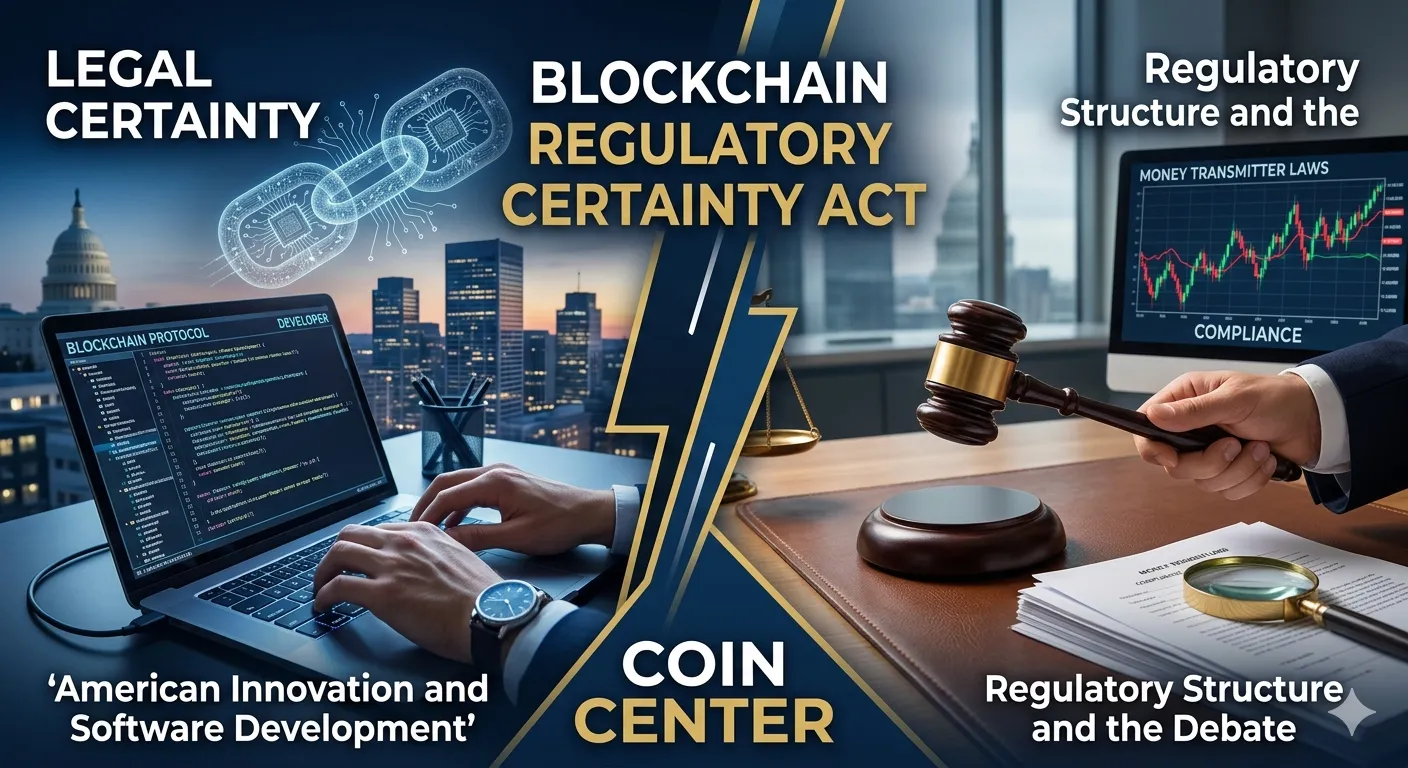
Coin Center is urging the U.S. Senate to pass the BRCA, protecting blockchain developers from being classed as money transmitters if they don't hold user funds. Legal clarity is key.
The US regulatory debate on how to govern blockchain innovation has reached a new stage; the crypto policy group Coin Center has officially called on legislators to take action to exempt software engineers from criminal punishment for the role their code plays in any activity.
Coin Center, an organization based in Washington D.C., urged the U.S. Senate Banking Committee to move ahead with the Blockchain Regulatory Certainty Act (BRCA) stating that U.S. innovation in the areas of blockchain and other similar technologies will be dependent upon the legal protections available to developers.
What the Blockchain Regulatory Certainty Act Aims to Fix
The Blockchain Regulatory Certainty Act, first drafted in 2018 by Tom Emmer, has recently re-energized attention.
Revised bill developed by Cynthia Lummis and Ron Wyden aims to clear up a major legal question the extent to which developers and other infrastructure providers are considered money transmitters by federal law.
The bill proposes a clear distinction:
Should not be treated as financial intermediaries those developers which are not entrusted with users’ funds
Decentralized protocols that are run by infrastructure providers (fuel for the network) should not be considered the same as custodial services.
Code, both writing and publishing, should not be subject to licensing rules intended for those handling money
This explanation is believed necessary for bringing present day financial regulations up to date with decentralized ones.
The Core Issue: Who Counts as a Money Transmitter?
Due to current financial regulations in the United States, money transmitters are required to register, report, and implement compliance programs; no matter the nation for which they are handling.
The problem, according to Coin Center, is that these definitions were developed months before blockchain existed.
As a result, there is growing concern that:
Decentralized protocol developers may be categorized as money transmitters.
Legal risk for node operators and validators.
Open-source contributers might be held responsible for network activity in which they have not participated
This is an attempt to remove this ambiguity by explicitly excluding non-custodial actors from these definitions.
Coin Center’s Argument: Innovation Needs Legal Clarity
Jason Semensatto, Policy Director, Coin Center, stated in a letter that the regulatory environment was curtailing innovation.
According to Somensatto:
Developers are playing in a murky legal environment.
Fear of criminal prosecution is discouraging experimentation and open-source contributions
The U. S. Is at risk of losing its advantage in blockchain development
He claims that: “Crypto developers should not be held liable for third-party use of software in the way that forms the basis of successful internet developer defenses.”
Equal Treatment with Internet Developers
Arguably, the most persuasive argument that coincides with Coin Center‘s position, is the analogy drawn between early developers of the internet and blockchain developers.
In the early days of the internet:
Developers invented protocols. They created the protocols HTTP, email systems,
And were used to do for good and bad reasons
Legal systems adapted to safeguard creators but to identify wrongdoers.
Coin Center argues that it is (or at least should be) the same for (or at least to) developing the blockchain. Penalties against developers for the use of its product would have been like indicting the developers of the Internet for cyber-crime.
Why the Stakes Are So High
The result of this legislative effort could well determine the future strength of the nation‘s crypto innovation.
1. Developer Retention and Talent Flight
In the absence of clear safeguards, developers might decide to develop in countries with more favorable legal regimes, for example Europe or parts of Asia.
2. Open-Source Ecosystem Health
Blockchain development is open-source by nature. Legal risks could prevent the community from continue contributing.
3. Institutional Confidence
Simple rules would not just benefit developers, but give investors and institutions peace of mind that they and their money are protected.
Balancing Innovation and Accountability
Though the BRCA addresses developer accountability it does not remove accountability entirely. Regulators would continue to have power to pursue:
Wrongdoers
Entities that have custody of user funds
Platform intentionally promoting illegal activities.
But in the case of the bill, I think the scope or goal is not deregulation, but accuracy or in other words, the appropriate players in the ecosystem are governed by the bill.
A Turning Point for U.S. Crypto Policy
Coined with the efforts by Congress to advance the Blockchain Regulatory Certainty Act, such trend illustrates a shift in the way legislators treat the digitalassets. Instead of and this new attitude indicates policymakers.
If passed, the bill could:
Set legal certainty for developers
Promote research innovation within the borders of the United States
Provide a global example for crypto regulation
The industry could be driven further offshore and into greater uncertainty if its lack of response continues.
Conclusion
Coin Center‘s initiative to further the Blockchain Regulatory Certainty Act underscores a core dilemma in present day regulation: the translation of existing law to disruptive technologies.
The bill further seeks to protect innovation by making it clear that developers who do not control user funds, are not money transmitters.
Whether the U. S. Senate Banking Committee will proceed or not proceed with the proposal at hand will determine whether or not United States will stay to be the frontrunning figure in the world of blockchain development.