Counterfeit Ledger Scam Raises Crypto Self Custody Concerns
 lu****@gmail.com2026-04-23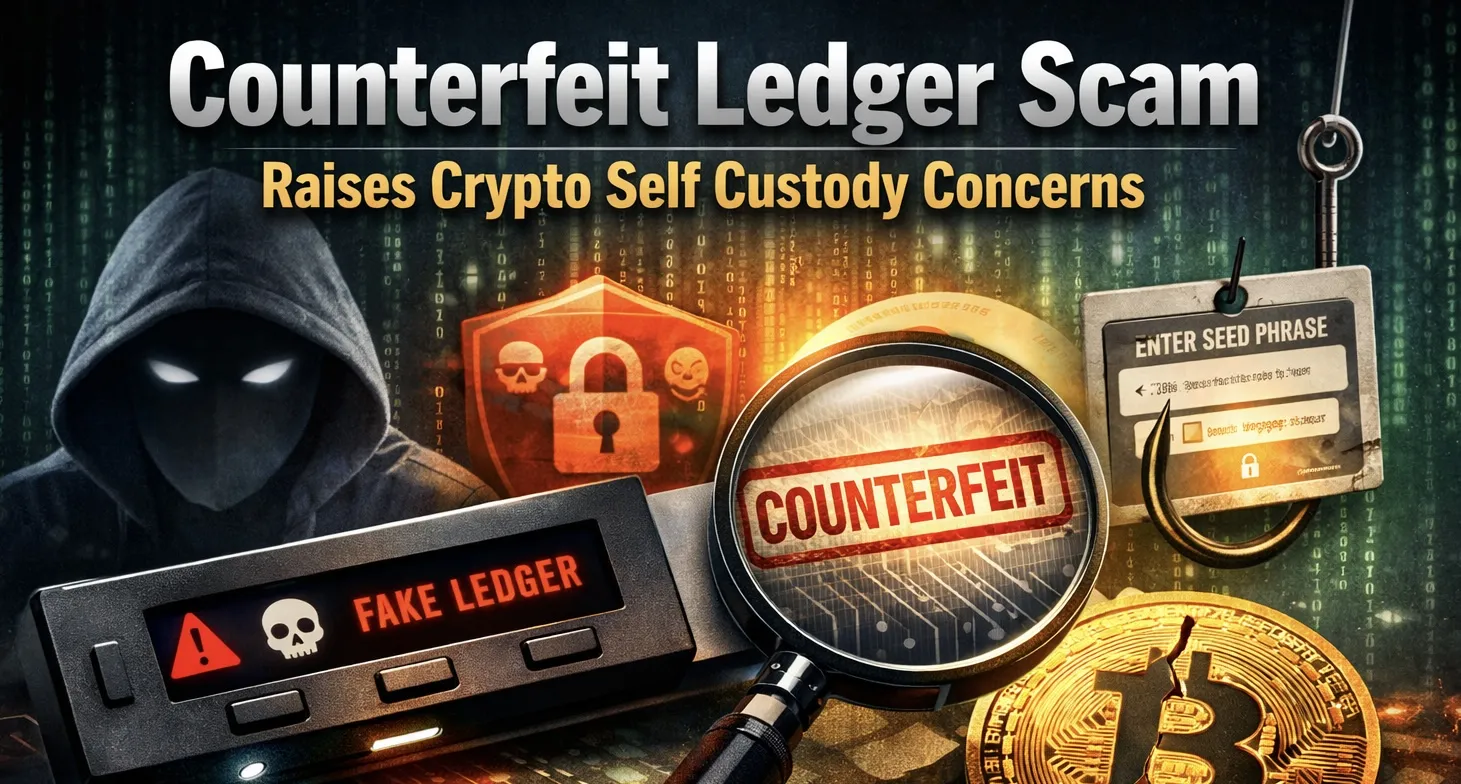
A Brazilian researcher warns of sophisticated fake Ledger wallets and apps stealing millions. Scammers use counterfeit hardware and social engineering to hijack seed phrases. Vigilance is key.
A Brazilian security researcher has expressed renewed concerns regarding the increasing number of scams aimed at cryptocurrency users following the unwitting purchase of fake Ledger hardware wallet specifically designed for the purpose of stealing digital assets. The scam was posted online on Reddit, and it raises alarm over the tendency of scammers targeting self-custody cryptocurrency users by imitating reputable hardware wallets and other sources in order to perpetuate their scam.
The warning has been issued at the same time many Ledger-type hardware wallets are heavily marketed as among the safest methods of storing crypto assets offline; however, the increase in adoption of hardware wallets has also led to an increase in creativity on the part of those who are attempting to steal from users by using fraudulently made counterfeit devices, fake software applications and social engineering methods.
How the counterfeit Ledger device was discovered
A security researcher using the handle "Past_Computer2901" on the "ledgerwallet" subreddit has shared that they had purchased a (supposedly) legitimate Ledger hardware wallet for personal use. When the wallet arrived, it appeared to have come from a legitimate source based on how it was packaged; therefore, the researcher was not aware of any issues at first.
However, upon closer examination and testing of the device, the researcher determined that the device was not a legitimate product but instead was part of an elaborate counterfeit scheme to compromise user funds as soon as the device had been turned on or used.
The researcher said the level of detail associated with this scam was extraordinary. The attackers must have put a tremendous amount of effort into mimicking the look of the legitimate packaging, the hardware design of the actual hardware, and the user experience involved with using an authentic Ledger Hardware Wallet.
The researcher also noted that they were still in shock due to the size of this operation but wanted to share this information with the cryptocurrency community so that they may stay safe from this growing threat.
Why counterfeit hardware wallets are especially dangerous
Ledger hardware wallets store private keys offline to protect them from being hacked online. Most people use a hardware wallet for long-term storage of their cryptocurrency because it also reduces the risk of being infected with malware or falling victim to phishing attacks.
That said, counterfeit devices completely nullify this security model. Rather than protecting private keys, counterfeit devices may have been designed to:
- Create a compromised seed phrase
- Leak private keys during device setup
- Redirect funds to an attacker's address
- Install a malicious firmware update
- Trick users into revealing their recovery phrase
Due to the inherent trust that users give to hardware wallets, most users will not know if a device has been tampered with until after they have lost their funds.
The danger posed by counterfeit devices is further compounded by the fact that they combine the risk of physical tampering with the inherent trust that many users place in well-known brands.
Growing trend of supply chain crypto attacks
This event is part of an overall trend of increasing sophistication of attacks against individuals who have chosen to take control of their own cryptocurrency by using self custodial solutions.
Over the past several years, attackers have shifted from simple phishing schemes to far more sophisticated supply chain tactics such as:
Counterfeit hardware wallets sold via non official resellers
Tampering with hardware sold on a secondary marketplace
Repackaging and renaming legitimate manufacturer's products as counterfeit
Stealing packages as they move through the shipping system to substitute counterfeit products for legitimate ones
Pre loaded counterfeit hardware wallets using someone else's pre loaded seed phrase or firmware
These actions create the opportunity for victims (the users) to be unable to distinguish real from counterfeit product, especially when they are purchasing their product from third party sources/ multiple levels removed vendors that do not verify the seller.
Experts in the field indicate that the self custodial model is the preferred way for many people to store cryptocurrency, as they are less likely to utilize any centralized custody solutions and therefore have a higher level of value stored in cryptocurrencies.
Related Incident Involving Fake Ledger Live App
This notice of counterfeit devices was issued after multiple other serious security incidents this month that have occurred with fake apps under the guise of being Ledger Live, which is the authorized application used to manage Ledger Wallets. Over 50 victims have been reported to have entered their 'seed phrases' (key word or phrase) into a fraudulent app of Ledger Live that was available in the Apple App Store as an unauthorised, redirected link (a “bait-and-switch” scheme).
When the victims entered their recovery phrase, the attackers then proceeded to remove money from the victim's wallet. Total losses from this incident are estimated to be approximately $9.5 million, prior to the malicious application being removed by Apple.
The attack also shows the vulnerability of even trusted applications downloaded from “app stores”, as they can easily become compromised by the ability of the attacker to avoid or bypass the app store’s application review processes and/or upload malicious updates to their application after initial approval has already been granted.
Why Seed Phrase Theft Remains the Most Critical Risk
Among all modern scams within the cryptocurrency realm, the same theme emerges as scammers seek out gain access to your seed phrase. The seed phrase is your currency wallet's master password and it usually consists of twelve to twenty-four words. Anyone that has access to your seed phrase has total access to the funds within your wallet.
Scammers utilize social engineering tactics primarily to motivate users into revealing their seed phrases. Some examples of this are:
Phony Wallet Recovery Requests
Impersonating Customer Support Personnel
Malicious Applications that ask for user confirmation
Fake Devices Asking Users to "Verify" their Device(s) on the Internet
Fake Security Alerts Indicating that There is Something Wrong with User's Account
Recovering from a stolen seed phrase once one has been exposed is typically not possible because of how most blockchain apps work, in the majority of cases all transactions are irreversible.
Security experts warn of increasing sophistication
A Brazilian scientist expressed concerns about a troubling development in cybersecurity – crypto scams are becoming more structured, sophisticated and difficult to detect than they were just a few years ago. Whereas in the past, scams generally involved clear phishing emails or poorly constructed websites, the advances made by scammers can include a combination of:
High-Quality Branding and Packaging
Functionally Fake Products that Function just Like the Real Thing
Mobile Apps that are Cloned with Nearly Identical User Interfaces
Customer Support that Looks Real
Multi-national Distribution Networks
Due to the sophistication of these products, average people may not be able to identify whether or not the product they are using is fraudulent until it is too late. Experts say that scammers are no longer random opportunists; they have become organized syndicates that engage in advanced, multi-year, complex fraud operations.
Impact On Trust In Self Custody Solutions
The crypto community encourages self custody as a method for users to maintain control of their own private keys without needing to trust centralized exchanges. A good example of the risks involved in full ownership of crypto digital assets is the recent news surrounding the counterfeit Ledger scam.
Self custody protects the user from risk by removing the counter party from the transaction. However, it also places 100% of the responsibility of securing their crypto onto the individual user.
Users must now exercise extreme caution in regard to the authenticity of devices they use, the integrity of software loaded on those devices, and the user's ability to follow good operational security practices.
Recent events like the counterfeit Ledger scam may lead many users to re-evaluate their method of storage for their digital assets, particularly if they aren't confident enough in their ability to identify and/or detect sophisticated attempts at fraud.
Key lessons for crypto users
There are many signs that help you identify ways to protect yourself from fraud:
1. Always buy your hardware wallets through an authorized retailer or from the manufacturer's official site.
2. Make sure you examine the packaging and look for tampering and confirm device functionality prior to use.
3. Entering your seed phrase for your wallet should only happen during the initial set up of the hardware wallet.
4. Download your software only from a legitimate source; either through an authorized app store or through the link provided by the manufacturer.
5. If you are purchasing your hardware wallet from third party sources and the price is significantly less than the manufacturer's suggested price, proceed with caution.
6. Always confirm the manufacturer's official verification of the firmware.
While none of these steps completely remove the risk of fraud or tampered with devices, each has played a major role in reducing the risk of becoming a victim of a counterfeit or tampered with device.
Conclusion
A Brazilian security researcher’s discovery of the fake Ledger hardware wallet demonstrates a rapidly developing and highly sophisticated threat landscape in cryptocurrency. The constant evolution of supply-chain attacks and social engineering tactics means that users who rely on self-custody will need to remain ever vigilant.
The recent emergence of the fake Ledger Live app, which led to millions of dollars in losses, shows that crypto scams are evolving from basic phishing to much more complex operations that blur the lines between true and false products.
The message to users is clear. In a scenario wherein control equals responsibility, security education is no longer optional; it is mandatory for safeguarding one’s digital assets.