Iran Is Treating Bitcoin as a Strategic Reserve Asset — But Tether Still Runs Its Oil Trade
 re****@gmail.com2026-04-22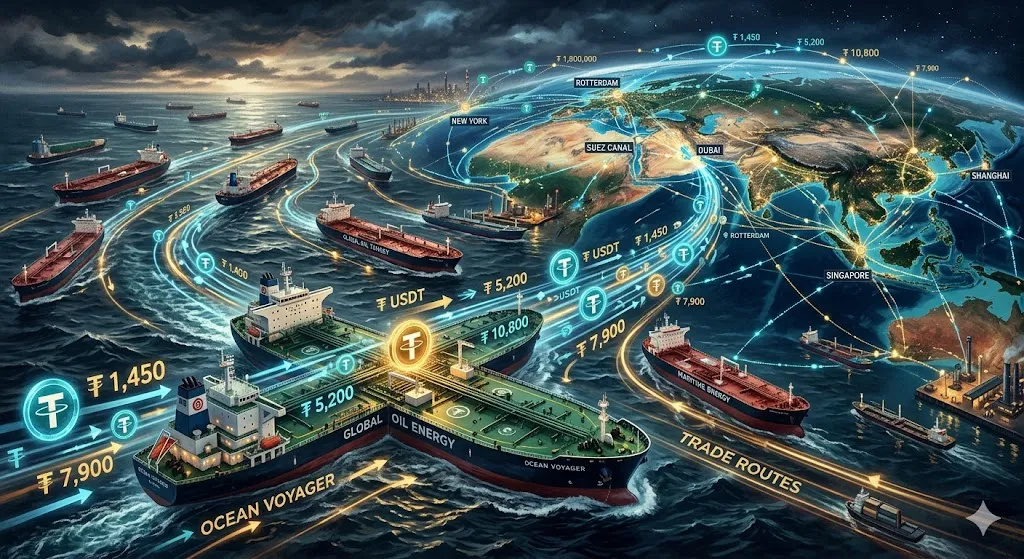
Iran holds Bitcoin as a strategic reserve to hedge outside the dollar system, while USDT dominates its oil trade payments — a split that reveals how sanctioned states actually use crypto.
By elevating Bitcoin to the status of a strategic state asset, the Iranian government can use it as a legitimate alternative to the dollar system to maintain value and financial flexibility. However, most of the operational payments for Iranian oil sales are made using Tether's USDT. Therefore, there is a considerable gap between the strategic framing of Bitcoin and the realities of using Bitcoin as a payment system; therefore, understanding how sanctions-pressured economies are using cryptocurrency is essential for developing a more nuanced understanding of cryptocurrency usage rather than simply applying an existing narrative to the use of cryptocurrency.
Why Iran Takes Bitcoin Seriously at the State Level
Iran has been facing decades of US-led sanctions which have made the dollar-based financial system, such as SWIFT access and correspondent banking, unavailable to them. Therefore, any country faced with such a situation will look closely at assets that exist outside of the traditional financial systems and the most obvious ability to do so is through bitcoin.
The Iranian government has taken concrete actions that demonstrate legitimate strategic intent rather than mere words. Iran legalized crypto mining in 2019, allowing licensed operators to use subsidized electricity in exchange for selling mined BTC to the central bank — a direct means of converting energy resources into internationally movable value.
The bitcoin miners in Iran who are operating with cheap electricity — with rates as low as $0.01–$0.05 per kilowatt-hour — can mine one Bitcoin for approximately $1,300, a commodity that can then be moved anywhere in the world without utilizing the existing dollar-denominated financial system that sanctions prohibit for Iran.
The BPI report indicates that Iran now regards bitcoin primarily as a store of value or a hedge against inflation. An estimated 22% of Iranians now hold digital assets, driving $4.18 billion in outflows in 2024 as the rial continued its multi-year collapse against the dollar. However, Iran currently appears to be further down this line of reasoning than most reports or public statements would suggest.
Why USDT Still Handles the Oil Money
Although they may look similar, there are differences between using Bitcoin as a reserve asset versus using Bitcoin as a settlement currency for commodity trade. This difference is critical for understanding why Tether has become the dominant currency in the Iranian oil transaction industry, despite the fact that, strategically, the Iranian government would like to see Bitcoin used.
To understand the oil trading process, we have to look at how trade occurs. Oil trades are based on invoice, schedule, and counterparty relationships. When Iran sells oil (principally to buyers in China, albeit also to third-party/ intermediary networks throughout Asia), the transaction has to settle in some form of value that the buyer will accept and which the seller will be able to utilize. Tether (USDT) is a dollar-pegged stablecoin that has high price stability, speeds through exchanges rapidly and has ample liquidity in the marketplaces where Iranian traders conduct their business, with the majority of Iran's crypto transactions denominated in US dollar stablecoins.
At scale, Bitcoin's volatility presents real challenges to using it as a currency for large-scale commodity exchange. For example, an oil cargo being invoiced in Bitcoin today could be worth significantly more or less at the time the transaction clears. Both purchasers and sellers face operational difficulties due to that uncertainty. USDT eliminates those issues through its peg to the US dollar. As a result, both parties agree upon what they are going to exchange at the time of making the transaction, even though they are both transacting via a non-dollar-denominated system of banking.
There is an element of irony in preventing the settlement of oil trades that circumvent sanctions through a dollar-pegged stablecoin issued from an entity within the reach of US enforcement resources, yet this practice does take place nonetheless since the functionality of alternatives is much less efficient. The Central Bank of Iran was found to have bought $507 million of Tether's USDT, according to blockchain analytics firm Elliptic, which mapped the central bank's wallet infrastructure using leaked documents.
What This Tells Us About Crypto and Sanctions
The Iranian case is one of the clearest real-world examples of how crypto actually functions in sanctions evasion, and it's more complicated than either the "crypto enables unlimited sanctions evasion" or "crypto sanctions evasion is overstated" camps tend to admit.
Bitcoin is useful for storing value outside the dollar system and moving it in ways that don't require correspondent banking. It's less useful for high-volume commodity trade that needs price stability and fast settlement. USDT fills the settlement gap but creates its own exposure — Tether blacklisted several wallets linked to the Central Bank of Iran in June 2025, freezing approximately $37 million in USDT — illustrating that centralized stablecoin issuers can disable wallets and halt transactions, unlike decentralized assets such as Bitcoin.
Iran appears to understand these tradeoffs. Holding Bitcoin as a strategic reserve while using USDT for operational transactions is a rational division of function given the actual properties of each asset.
The BPI report surfaces something that policymakers designing crypto sanctions enforcement need to grapple with: the tools being used aren't monolithic. Different assets serve different functions in sanctions-pressured economies — the IRGC's growing crypto footprint accounted for approximately 50% of Iran's total crypto ecosystem in Q4 2025 and has been documented across billions of dollars in transaction volume according to OFAC designations and leaked Central Bank of Iran addresses.
Bitcoin sits in Iran's strategic reserves. Tether moves the oil money. Both facts matter, and neither tells the full story alone.