JPMorgan Faces $328M Lawsuit: A Crypto Ponzi Scheme Allegedly Operated Right Under Their Nose
 ob****@gmail.com2026-04-16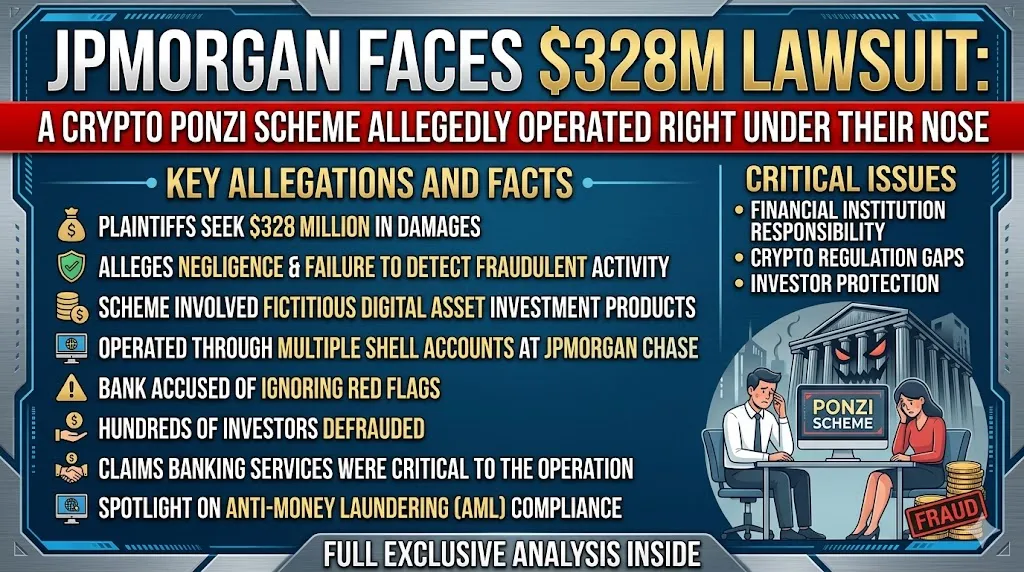
The lawsuit alleges that the bank not only refused to allow depositors to withdraw their funds but also facilitated the loss of thousands of depositors' lifesavings.
You may be vulnerable to losing everything due to a scam perpetrated by a large bank, with thousands of investors now claiming this has occurred
The bombshell lawsuit against JPMorgan Chase, the world's largest bank, is creating ripples across both banking and cryptocurrency industries.
The lawsuit alleges that the bank not only refused to allow depositors to withdraw their funds but also facilitated the loss of thousands of depositors' lifesavings due to DigitEx's ($328 million dollar competitive Ponzi scheme) operation.
What's even more troubling about this situation is that signs had been visible beforehand of who would not survive competitively in the market.
The Scheme Behind the Scandal: Inside DigitEx
Now let's go through the case step by step.
At the center of this trial is the cryptocurrency investment firm called DigitEx. The firm offered investors incredible returns in exchange for their investment dollars based on the premise that it was a legitimate crypto trading/arbitrage service but apparently operated its business using old school Ponzi scheme methods (the type that has been warned about by many finance experts for years).
DigitEx marketed itself as an innovative new way to trade they advertised to their investors with professionally created websites, marketing materials, and endorsements from 'happy' customers about the accuracy of their trading and the success of their proprietary algorithms and/or expert traders at generating positive returns regardless of how well (or poorly) the crypto currency market was performing at any given time.
Here's how the DigitEx operation worked in three devastating steps:
Stage 1: The Unquestionable Guarantee. DigitEx operators recruited everyday investors ( retirees, working families, first time investors) by providing a guarantee that they will achieve consistent and significant returns on their investment in cryptocurrency; they presented themselves as crypto geniuses who had figured out how to guarantee profit from cryptocurrencies; some investors claimed to have been promised returns of up to 20% per month.
Stage 2: The False Hope of Success. Early investors in DigitEx received their promised returns, and in doing so, created an extremely strong word-of-mouth marketing campaign for DigitEx investors who would tell their friends and family about what they thought was an incredible investment opportunity with DigitEx.
Stage 3: The Inevitable Bust. Like all Ponzi schemes, the mathematics eventually caught up with DigitEx. The lack of new investor money into DigitEx caused all of the funds to evaporate, and as a result, hundreds of millions of dollars were lost, leaving thousands of families with financial havoc in their wake.
Where JPMorgan Allegedly Failed
To summarize and restate the lawsuit's claims against JPMC: DigitEx was able to use JPMC as their primary bank for many millions of dollars in transactions that would be deemed suspicious by any standard, while JPMC did not take appropriate actions to perform its obligating Anti-Money Laundering (AML) procedures.
This is extraordinary because financial institutions like JPMC employ thousands of compliance professionals, fraud detection systems, and regulatory oversight. Further, DigitEx operated the Ponzi scheme through cells within the JPMC system for a considerable period of time.
The files associated with the lawsuit state that JPMC missed many blatant signs that were previously mentioned; events such as extremely large deposits/withdrawals of cash, unusual transaction patterns, and rapid cycling of funds between accounts, indicating great cause for concern.
Also, the 3 different steps to the DigitEx scheme mentioned earlier require a banking partner helping to process the transactions. Without a major bank system processing these transactions, it would have been almost impossible for DigitEx to appear as a legitimate business entity either in the eyes of its investors.
What This Means for Your Money
You might think "I did not place my money on DigitEx; I do not have a dog in this fight." However, there are much larger implications to this case than simply your relationship or lack thereof with DigitEx.
What are banks truly doing to protect their customers from financial predators?
In addition, JPMorgan has not admitted that there was anything done wrong at all. JPMorgan has compliance programs in place and has made it known that they are committed to fighting financial crime. A lawsuit is an allegation and not a proven fact.
The growing amount of cases like this, are pushing for accountability for how the banking industry operates. Just last year several banking institutions paid out billions of dollars in settlements due to lack of oversight. Former Federal Prosecutors also believe that there are increasing pressures for banks to catch criminal activity that is flowing through their systems.
Protecting Yourself Going Forward
What can you do then to avoid being part of the next DigitEx saga? Here’s what to do:
1. Be suspicious of all investments that promise to deliver returns. In particular, when you're considering crypto or investments related to crypto, then recognize that volatility rules the day. You shouldn't expect consistent returns on an investment in a crypto asset.
2. Validate that the investment platform you want to invest offers independent verification, and does not exhibit red flags such as pressuring tactics, referral bonuses or ambiguous methods for generating profits.
3. Understand that the fact that many investors will be able to process payments through a legitimate bank does not guarantee that the business associated with the transaction is a legitimate business. DigitEx had many investors because it was a well-known fact that they had large banking relationships.
The Road Ahead
This lawsuit has just started moving through the courts and is still far from resolved. While we are not yet certain how this case will be resolved, we do know one thing — that thousands of investors have lost substantial funds as a result of the actions of DigitEx, and that families all over the country lost their retirement savings, as well.
Over the next few months, a determination will be made regarding whether or not JPMorgan will assume any legal responsibility for their involvement with DigitEx. However, what has been accomplished through this legal action thus far is a national dialogue regarding the need for banking institutions to be liable for losses incurred in crypto in order to bring meaningful liability to cryptocurrencies.
As such, we have answered the original question of whether or not your financial institution's involvement matters; YES, it matters! You deserve financial institutions that protect you from scams such as DigitEx BEFORE your life has been impacted BY these schemes!
Stay informed! Remain skeptical! Never invest any money that you cannot afford to lose in deals that appear to be "too good to be true"!
Please share this article with anyone who currently invests in crypto; doing so may save that individual from being victimized by another scam like DigitEx.