Kalshi Is Launching Crypto Perpetual Futures: And Could Reshape How Americans Trade Digital Assets
 jo****@gmail.com2026-04-23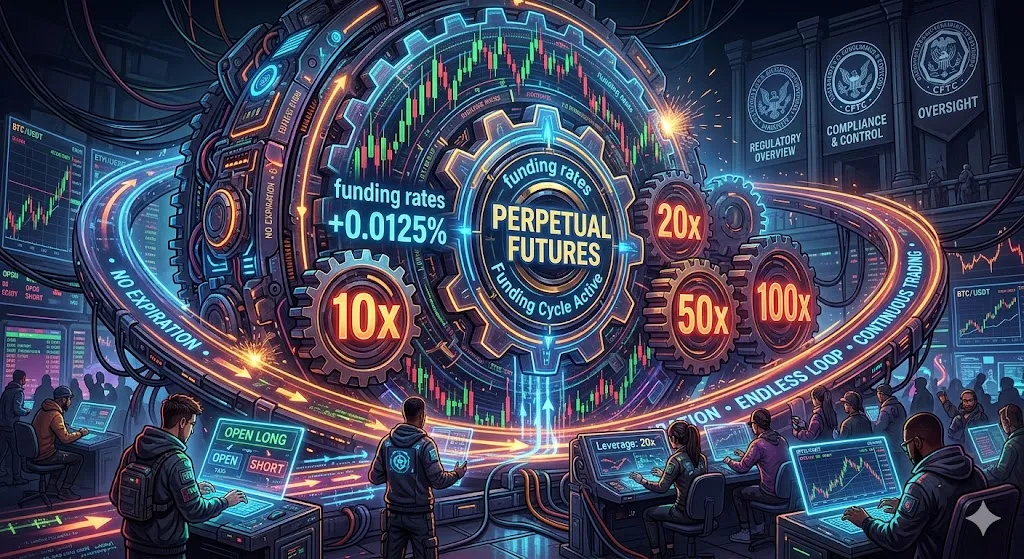
Kalshi is exploring the first US-regulated crypto perpetual futures, targeting offshore volume and retail traders currently excluded from CFTC-compliant leveraged crypto derivatives.
Kalshi aims to increase its market share of cryptocurrencies rapidly. Kalshi, a prediction market, has been exploring ways to enter the cryptocurrency trading market by introducing perpetual futures (high-risk, leveraged contracts without expiration) much like the way that many off-shore exchanges have been able to dominate amongst highly active traders across the globe. If Kalshi moves forward with this strategy, it will be the very first US-regulated marketplace to offer retail customers perpetual contracts with cryptocurrency as the underlying asset. The fact that this is happening now is deliberate and a massive opportunity.
What Kalshi Actually Is
Kalshi is a federally regulated prediction market that allows users to wager on the result of actual events (including election outcomes, interest rate decisions and the release of economic data). A contract only gives you two outcomes: correct or incorrect, and you will receive compensation based on your prediction.
Even though there are similar types of products available, one of the biggest reasons that Kalshi has earned such a good reputation is because it fought a lengthy legal battle against the CFTC in order to be able to offer its prediction markets for U.S. presidential elections. Kalshi was successful in that fight. This is relevant to this discussion because the CFTC's acknowledgement of Kalshi's regulatory status is what separates the crypto perps product from all other currently available U.S. retail based products.
Why Perpetual Futures Specifically
Perpetual futures are easily one of the largest and most widely traded products in the world of cryptocurrency by volume traded. Perpetual contracts do not expire like standard future contracts and can be held by traders indefinitely. Price of things can continue to be tied to the spot price of the underlying asset by the establishment of a funding rate - a periodic payment made between long and short positions will prevent the contract price from drifting too far from the spot price.
There is a strong appeal associated with being able to trade perpetual contracts because of the leveraged position, flexibility in being able to hold onto the position long-term and the ability to continue trading without needing to roll contracts every week. Perpetuals account for most of the total trading volume at exchanges such as Binance. US traders have been primarily excluded from this product due to offshore exchanges being prohibited from serving US customers and there being no domestic exchange offering in compliance with CFTC regulations.
This is the gap that Kalshi is looking to fill.
The Regulatory Angle
That's where things get exciting! The CFTC currently oversees futures and derivatives markets, and Kalshi is already engaged with the CFTC, but adding Crypto Perpetual futures would build upon an existing regulatory relationship rather than starting from scratch with a new application process. The actual integration of Crypto Perpetual futures into it requires obtaining CFTC approval of Kalshi's contract specifications. It must also agree on how Kalshi will mitigate risk with perpetual futures prior to any decision being made.
The current U.S. regulatory climate reflects a more accepting attitude toward cryptocurrency products than it did two or three years ago. The SEC has reduced its level of market regulation; Bitcoin ETFs are now traded on U.S. exchanges; and there is a stronger political will to create conditions that keep cryptocurrency-related activities within the U.S., rather than push them to unregulated overseas venues. Kalshi's management is correctly assessing these developments.
What This Would Mean for the Market
Should Kalshi issue crypto perpetual swaps, should they go successful then downstream impact could be material/real.
U.S. traders using offshore platforms today and accepting the legal grey area as well as the counterparty risk associated with those platforms would now have an alternative domestically that has regulatory protection behind it. That is significant. Over the past few years multiple offshore exchanges have either collapsed or frozen their customers' funds. A platform that is regulated by the CFTC with separate customer accounts should represent a dramatically different risk profile.
This would also negatively impact U.S. exchanges who have been entering into derivatives markets but have not been able to offer crypto perpetuals to retail traders to this point. If Kalshi introduces crypto perpetuals that would fundamentally change the competitive landscape.
For the overall crypto derivatives landscape, having access to a regulated U.S. platform for crypto perpetuals may mean that a significant amount of trading volume that today is conducted offshore will begin being conducted onshore. It is very difficult to say how much volume there is today as trading is sticky and fees pricing are very much a part of that decision process and it is highly likely that there are products/leverage offered by offshore exchanges that a regulated CFTC exchange will not be able to offer. However there will be a percentage of that volume that will move onshore.
What to Watch
Nothing is confirmed yet. The reports describe Kalshi as exploring the launch, not announcing one. Getting from exploration to live product in the derivatives space involves contract approval, infrastructure build-out, and liquidity — none of which happen fast.
The questions worth tracking: what leverage limits Kalshi proposes, whether the CFTC pushes back on the contract structure, and how quickly established crypto exchanges respond if approval comes through.
Kalshi has a habit of moving into markets that everyone assumed were closed. It did it with election contracts. Crypto perpetual futures would be a much larger market, with a much larger audience watching.