LBank’s $100M Risk Protection Fund: How It Works and When It Saves Your Position

This article educate traders on the LBank’s $100M Risk Protection Fund designed to cushion traders against abnormal short-term price spikes
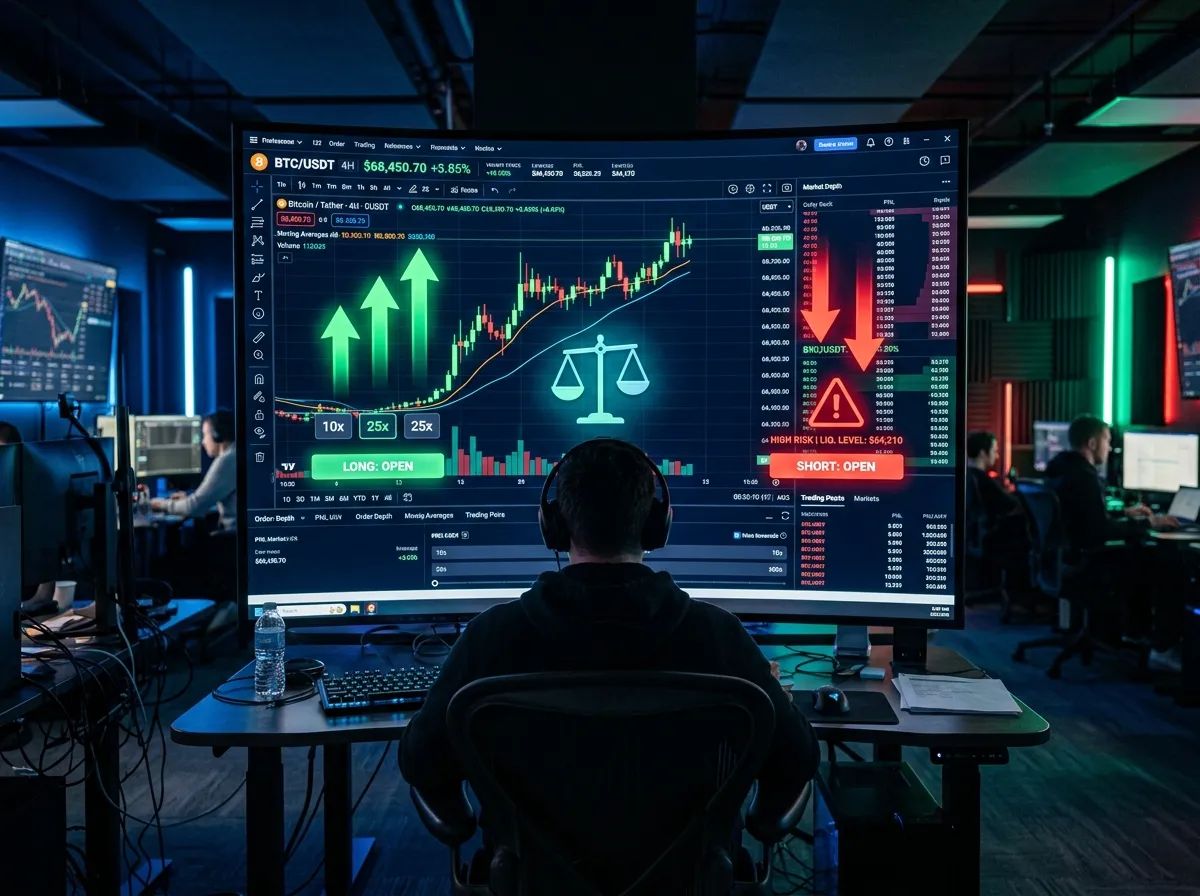
Crypto futures trading can feel like riding a rollercoaster blindfolded. One moment, the market moves smoothly, and the next, a well-placed stop-loss or an unwanted liquidation may be wiped away by a rapid spike.
Those heart-stopping moments, often called wicks, have ended many promising sessions in frustration. LBank decided to address exactly that pain point with its $100 million Futures Risk Protection Fund.
Launched in early 2025, the fund is designed to help cushion traders in case of abnormal short-term price dislocations rather than everyday volatility.
It does not serve as an umbrella that covers all bad trading decisions but will focus on certain unfair situations when the prices deviate drastically from the market before reverting back.
In a space where milliseconds matter, this kind of protection can make the difference between walking away bruised and being able to jump back in with confidence.
What Exactly Triggers the Protection?
The fund activates during what LBank defines as “wick events.” Picture this: within a single minute, the K-line price on LBank deviates by more than 2% from the reasonable market price (calculated from the top five major futures exchanges via aggregators), then quickly rebounds. That brief but violent swing is the trigger.
Not every price drop qualifies. Normal market moves, even sharp ones driven by real news, fall outside the scope.
The fund focuses on anomalies that appear tied to temporary platform-specific factors or extreme fleeting dislocations. This distinction keeps the mechanism fair while preventing abuse.
This coverage applies to the top 100 futures trading pairs by market capitalization, which encompasses popular tokens such as BTC, ETH, and SOL, as well as other liquid perpetual contracts.
So whether you are trading blue-chip names or slightly smaller but still heavily traded pairs, you likely fall under the umbrella if conditions align.
How Compensation Actually Works
When a qualifying wick event occurs, resulting in forced liquidation or stop-loss execution, impacted traders get 120% of their losses in USDT.
The additional 20% is a goodwill gift that acknowledges the disruption and helps to speed up the restoration of capital.
The process moves quickly as LBank reviews the event using cross-market data for verification, and once confirmed, compensation lands in the trader’s spot account within 48 hours.
There’s never any lengthy claims process or back-and-forth, just straightforward credit, so you can reassess and continue trading without waiting weeks for a resolution.
On top of individual payouts, LBank allocates an additional 10,000 USDT reward pool whenever a qualifying spike happens.
This amount gets shared among all users who held an open position in the affected pair at the time of the event. It is a nice collective bonus that spreads a bit of positivity even amid the chaos.
Imagine you had a leveraged long on ETH/USDT with a tight stop-loss. A sudden 3% downward wick on LBank (while other exchanges barely flinched) triggers your stop and liquidates the position at a bad price.
Under normal circumstances, you would absorb the full hit. With the fund, you recover 120% of that specific loss, plus a slice of the shared reward. The net effect? You end up in a stronger position than before the anomaly struck.
When It Saves You and When It Does Not
This fund shines brightest during those rare but painful flash dislocations that plague leveraged trading. It does not protect against gradual adverse moves, poor risk management, or legitimate market crashes.
If Bitcoin drops 8% over several hours on real macro news, the fund stays quiet. Its purpose is to neutralize the “unfair” wicks that feel more like technical glitches than true price discovery.
Some traders might wonder about edge cases, like what if the wick happens right at a major news release?
LBank’s verification process, which cross-checks against external market data, helps filter those out, as the 2% threshold and one-minute window create clear boundaries that prevent overreach.
It is worth noting that the fund adds a layer of psychological comfort. Knowing a safety net exists for extreme anomalies can encourage more disciplined position sizing and stop placement, rather than paranoid over-hedging. In leveraged trading, peace of mind often translates into better decision-making over time.
Why This Matters for LBank Traders
In a competitive exchange landscape, risk management features like this one stand out, as futures trading already carries high inherent danger due to leverage.
Introducing any measure that will provide users protection from any anomalous signals signals a commitment to user fairness that goes beyond basic security measures.
The $100 million size provides substantial backing, giving the program real teeth rather than symbolic value.
Combined with LBank’s other tools, such as deep liquidity in futures markets and features in zones like EDGE, it creates an environment where aggressive traders can participate with slightly less dread about freak events.
Of course, no protection fund eliminates all risk. Smart traders still manage leverage carefully, diversify across pairs, and avoid overexposure during high-volatility periods. The fund simply removes one particularly frustrating variable from the equation.
At its core, the $100M Risk Protection Fund reflects a philosophy that trading should reward skill and conviction, not punish users for brief technical oddities outside their control.
When those wicks inevitably appear, and they will, having this mechanism in place can turn a potential disaster into a recoverable setback.
For anyone active in LBank futures, understanding exactly when and how the fund intervenes is worth the few minutes it takes to review the official rules.
In volatile markets, the smallest edges compound. Sometimes that edge comes not from spotting the next big move, but from avoiding unnecessary losses when the market briefly malfunctions.