New York Just Went After Coinbase and Gemini — And Prediction Markets Are the Target
 jo****@gmail.com2026-04-23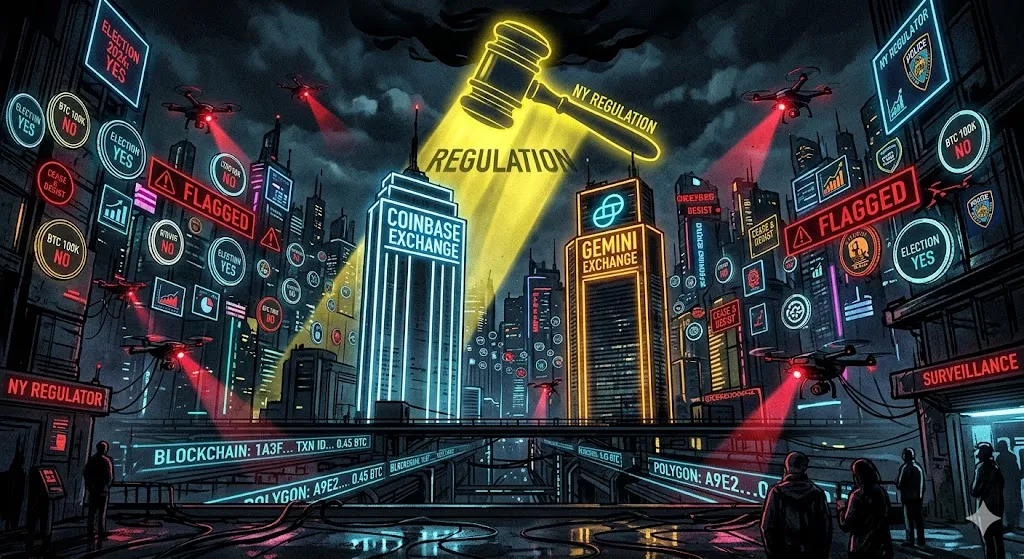
New York's AG sued Coinbase and Gemini over unlicensed prediction markets, calling them illegal gambling. The outcome will set precedent for crypto-based prediction markets nationwide.
New York is again going after criminals. This time it is going after major US crypto companies: Coinbase and Gemini.
Both of these platforms operate prediction markets, which are places where people can bet on the outcome of an event. With the NY Attorney General going after both companies, we see that New York is not simply letting the federal government decrease its enforcement of cryptocurrency. In fact, NY is now filling the void that the federal government has left.
Although it does not solely affect those two companies, this development represents a challenge to answer the question of how prediction markets will be treated in the broader regulatory scheme in the US. Until a ruling, this remains an open question.
What Prediction Markets Actually Are
The fundamental idea is nothing new: People have placed bets on election outcomes and the occurrence of events for centuries. What has changed is how these markets operate — today's prediction markets leverage blockchain technology for settlement and operate through smart contracts automatically, enabling just about anyone with an internet connection to stake a claim on virtually any outcome of any event.
The largest prediction market today, Polymarket, is being actively utilized and has recorded billions of dollars' worth of volume over the past year or so; in recent months, specifically the upcoming 2024 U.S. election cycle has created a significant increase in interest towards them, particularly because of many media outlets reporting on prediction markets during this time and their sometimes seeming to be more accurate than traditional polling methods, which resulted in many new users entering this market space.
Regulators were drawn to prediction markets largely because of the visibility that they attracted, especially through high-profile and highly publicized events such as the upcoming election cycle. This visibility also attracted the attention of regulators who do not think that these products fall under "security" regulations. Examples of entities such as Coinbase and Gemini do not act like prediction market platform entities but only provide access to them. They will still, however, be required to comply with any applicable local laws including any applicable registration and reporting requirements.
Why New York
New York has always taken a tough approach to financial regulations, especially when it comes to cryptocurrencies. The BitLicense framework has frustrated many players in the industry since it was put in place in 2015, forcing many businesses to leave New York to avoid the regulatory burden. A number of companies have also been fined heavily by New York for violating these laws. The New York Attorney General's Office will pursue cryptos and crypto companies that other larger agencies will not pursue.
The question of whether prediction markets are allowed in New York is still up in the air. The federal government has stated that the CFTC is responsible for overseeing derivative contracts, including whether they can be created as prediction markets. Kalshi entered into a long legal battle with the CFTC so it could get approval to operate as a CFTC regulated market. Polymarket has also settled with the CFTC as a result of operating in the US and not having been properly authorized.
On top of this complex regulatory picture on the federal level, New York's intervention adds a layer to the already complicated question. The NYAG will probably take the position that prediction contracts are illegal under state law because they are unregistered securities or illegal gambling products, as it has done with crypto products in the past. The court system will ultimately determine whether they agree with the argument made by the NYAG.
What It Means for Coinbase and Gemini
Two to three years have changed both Coinbase and Gemini completely; while Coinbase has emerged from SEC litigation largely unscathed and has the resources and expertise in place to do so again in the future, Gemini has gone through extensive repairs due to their own regulatory issues (mainly related to its earn program and Genesis's collapse) and have worked hard over the past year to restore customer and regulatory trust. Neither Coinbase nor Gemini is going to go away easily because of the rapid expansion of the prediction market, strong interest from customers in prediction markets, and the precedent a state regulator attempting to pressure either company out of prediction markets would establish.
The more intriguing question will be what type of relief New York will actually be looking for — will it be for a cease and desist regarding prediction markets; fines; will they want to undergo an overhaul of the delivery of prediction market products? Knowing what they are seeking helps determine how costly or feasible it may be to enter litigation, and if a settlement is a more appropriate option than pursuing litigation.
The Bigger Picture
This action fits a pattern that's been building since prediction markets went mainstream during the 2024 election cycle. The products got popular fast, the regulatory frameworks didn't keep up, and now enforcement is arriving after the fact.
The federal government's posture has softened on crypto broadly. The SEC has pulled back on several cases, Bitcoin ETFs are trading, and there's political will in Washington to bring crypto activity into regulated channels rather than push it offshore. But soft federal posture doesn't automatically translate to soft state posture. New York, California, and a handful of other states have their own enforcement machinery and their own political incentives.
Prediction markets are a useful test case because they sit at the intersection of crypto, gambling, and securities law — three regulatory domains with overlapping and sometimes conflicting rules. What New York does here, and how Coinbase and Gemini respond, will shape how the next wave of enforcement actions gets framed.
The industry has been hoping for regulatory clarity. Actions like this are a reminder that clarity, when it comes, doesn't always look the way anyone wanted.