Scammers Demand Crypto from Stranded Ships in the Strait of Hormuz
 ra****@gmail.com2026-04-23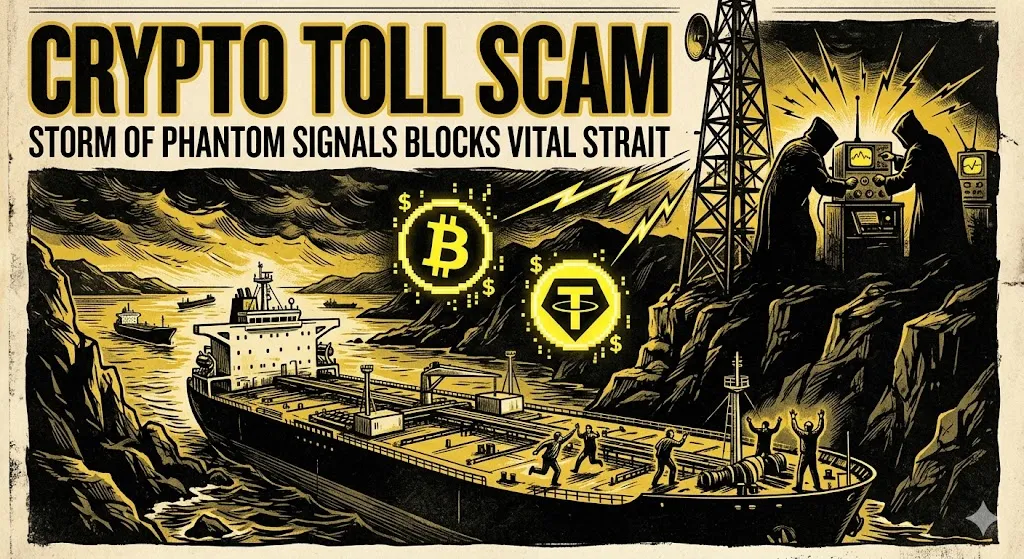
Scammers posing as Iranian authorities are demanding BTC and USDT from stranded Gulf ships for fake Hormuz passage — at least one vessel paid, attempted transit, and was fired upon.
Dozens of vessels have found their way to the Arabian Sea but have yet to clear passage with any of the governments of the various countries along their route. Their crew members have been held in limbo for weeks, awaiting the chance to continue to move their vessels into or out of the Gulf Region.
On April 21, 2026, the Greek maritime risk management company MARISKS (established in 2020) warned all shipping companies that unidentifiable agents are making scene contacts with the intention of impersonating the Islamic Republic of Iran's authorities regarding payment of an "invoice" before clearance will be granted through the Strait of Hormuz. According to MARISKS, "these specific messages are fraudulent. The Iranian government has not provided written confirmation supporting such an action." As of this writing, the Iranian government has not publicly commented on this matter.
What the Messages Actually Say
The con works on a structured pattern. The scammers send fake messages to ship owners to submit their vessel documents to the Iranian security services' purported review. After the purported document review, they will quote a crypto fee for the ship's "passage" and will provide a "window of time" for when the ship can leave. After payment has been received and confirmed in BTC or USDT, the ship will be permitted to pass through the channel. The whole process follows the look and feel of a real bureaucratic process and is the point of the con.
Iran has made it mandatory (as of mid-March 2026) for laden oil tankers to pay actual transit fees to cross through the strait. Oil tanker fees start at approximately $0.50–$1 per barrel of crude cargo, meaning a fully loaded VLCC carrying roughly two million barrels pays approximately $2 million. The payments are expected via BTC, USDT, or Chinese Yuan.
According to the spokesman for the Oil, Gas and Petrochemical Products Exporters' Union, Hamid Hosseini, the reason why Iran is accepting cryptocurrency for these transactions is due to the constraints of the current sanctions on Iran as cryptocurrencies "can not be traced or frozen."
This con works because it is taking place against a backdrop of something that actually exists.
The Context Making This Possible
The Strait of Hormuz, located between Iran and Oman, previously accounted for about 20% of worldwide oil and liquefied natural gas exports, with oil flow through the strait averaging 20 million barrels per day in 2024. U.S. Energy Information Administration Since late February 2026, shipping traffic has been virtually non-existent. The Strait has been opened and closed several times by Iran since late February, and the U.S. has put a naval blockade on Iranian ports and turned back 27 vessels. The U.S. is in the midst of diplomatic negotiations with Iran regarding the strait and its shipping.
Approximately 400 vessels and approximately 20,000 sailors are stuck in the Gulf, and at least one vessel that tried to exit the strait on April 18 and was hit by gunfire from Iranian boats may have been a victim of the fraud. While ship owners lose money every day, there is a deterioration of the crew's well-being and each message that might provide a means of getting through the strait will receive significant attention.
At Least One Ship Paid — and Was Fired On
MARISKS thinks one ship was a victim of this scam. On April 18, a vessel tried to cross the strait after allegedly paying this fraudulent fee; it was shot at. The company has not said which ship it was or the flag state the ship was flying.
A blockchain forensic company named TRM Labs stated that, to date, they have not seen any blockchain-confirmed transactions made by a shipping company that would allow it to properly pay its transit fee(s) through cryptocurrency for the Hormuz Strait. However, TRM's European/Middle Eastern/African Policy Director, Isabella Chase, stated the following: "even if a shipping company pays in good faith, it runs the risk of facing legal liability if somebody scams it out of its payment."
Any payments being made that end up in a wallet associated with an OFAC-sanctioned entity would fall under the Office of Foreign Assets Control of the U.S. rules and regulations — and as Chase warned, "crypto payments offer no safe harbour" from that exposure. Ms. Chase said there is no haven within the cryptocurrency for shipping companies, i.e. any wallet(s) with payment-related demands should be treated as a high-risk category until their validity can be confirmed via blockchain intelligence.
Key Facts at a Glance
This Is Not the First Time
This type of scam has appeared at the strait before. In mid-2025, an unidentified fraud group sent emails to vessels demanding $100,000 for both inbound and outbound passage, threatening to "blow up" ships that refused to pay. EOS Risk Group flagged those messages at the time, noting obvious signs of unsophisticated fraud — misspellings, no organizational signature, and an email server associated with known scam accounts. The 2026 version appears more polished and deliberately designed to mimic Iran's actual payment procedures, following Tehran's formal proposal to charge official crypto tolls for safe transit.
MARISKS advises shipping firms to treat unsolicited crypto or yuan payment requests with extreme caution and to verify any communications through official diplomatic or naval channels. In a crisis zone with no resolution in sight, the pressure to find any exit will keep making stranded ships a target.