Vietnam's 0.1% Crypto Transaction Tax Is Now Live

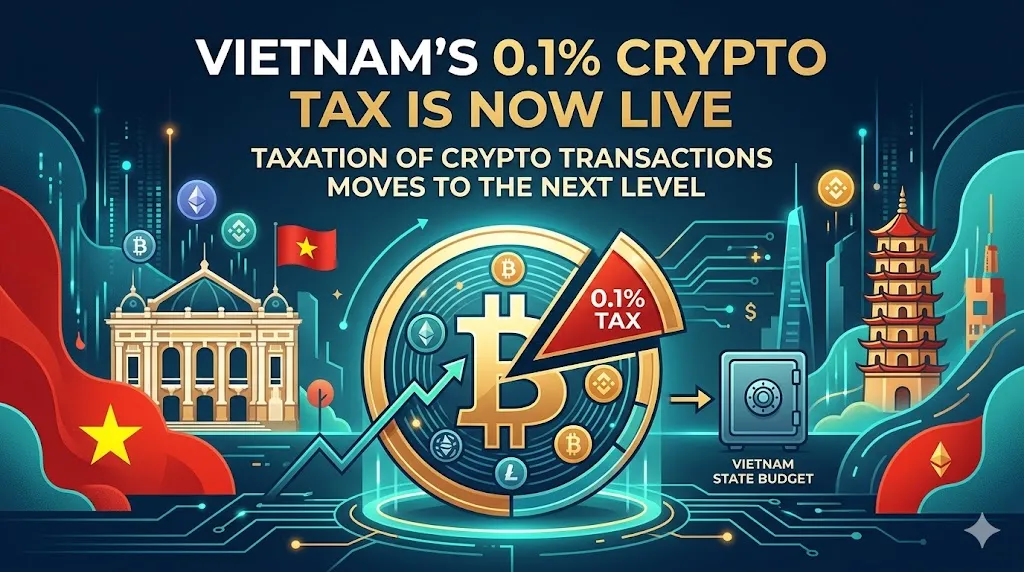
Taxation of crypto transactions in Vietnam moves to the next level as the country implements 0.1% tax on crypto trades.
Taxation of crypto transactions in Vietnam moves to the next level as the country implements 0.1% tax on crypto trades.
Key Takeaways
- The new tax on crypto trades shows that the country is moving towards formalizing their overall crypto market.
- It applies to all domestic transactions which makes Vietnam among the countries in Asia with regularized crypto markets.
- All crypto traders will need to adjust their trading strategies as a result of the new tax structure.
- This tax may benefit long-term HODLers/Investors because it could result in more institutional funds coming into the market.
Introduction
You open your eyes to a rude awakening, noticing that yesterday's deals have eaten into your budget a little bit extra. There's no bug. No mistake. It's simply Vietnam introducing its new 0.1% trading tax, as intended.
If you trade crypto currency in Vietnam, or pay attention to the South-East Asian markets in any way, shape, or form, then you know that things have just gotten serious in this particular industry. The Vietnamese Government isn't putting out an arbitrary figure here – they're making a statement to the entire world: The crypto market of Vietnam is coming of age.
This guide will tell you exactly how.
What Actually Happened on March 27, 2026?
March 27, 2026, was not just an ordinary workday but marked a critical step that most other Southeast Asian countries are still wary of taking.
The Vietnamese government introduced a 0.1% transaction fee on all cryptocurrency transactions carried out in the domestic market. For instance, every time you exchange cryptocurrencies valued at $1,000, you will have to pay a $1 transaction fee. That is hardly something to be excited about.
However, its significance is immense.
Vietnam joined the ranks of a handful of Southeast Asian countries that are no longer turning a blind eye to cryptocurrencies but have started recognizing them officially and taxing them.
Why 0.1%?
The rate of taxation of 0.1% was not established by chance; it was designed to be very similar to the existing stock market taxes assessed by the Vietnamese government as part of their regular economic transactions. In other words, the Vietnamese government takes digital currency as seriously as the rest of its financial system.
According to Chainanalysis annual awards, Vietnam is ranked among the top ten countries in terms of cryptocurrency adoption globally. Millions of citizens in Vietnam had been trading digital currencies prior to this tax; therefore, it fits squarely within their legal frameworks for taxes.
How This Tax Actually Works — 3 Simple Steps
And here's how the entire system works in simple terms:
Step 1: Make the Crypto Trade
You engage in the buying, selling, or exchanging of cryptocurrencies from any domestic platform that has been established. The total transaction value will be automatically computed.
Step 2: Compute the Tax
The 0.1% tax is calculated against the total transaction amount, and not necessarily your earnings.
Step 3: Withhold the Tax or Report It
It depends on how compliant the domestic platform has been in its operations whether to withhold the tax from you or report it for you.
No paperwork and no accountants needed.
What This Means for Different Types of Traders
If You Are a Day Trader
Because the percentage is so small, you may not notice much of a change. However, depending on the number of trades you execute daily or on average, the volume can pile up quickly. For example, if you make 20 trades per day at $500 each, you will pay about $10 in tax per day (not counting any tax on the actual transactions). That's a $300 per month hit! Adjust your trading preferences and practices accordingly. You will be better off with fewer, larger and more calculated trades, rather than the opposite.
If You Are a Long-Term Holder (HODLer)
Honestly? There will be some impact, but probably not much (as you are not trading all the time). The actual 0.1% will affect you very little because of the number of trades that you do. However, another major impact this regulation may have is the influx of institutional money into the exchange markets will become more pronounced. Overall, an increase in institutional money will have a positive effect on the rising price of the underlying assets over time.
If You Are an Exchange or Trading Platform
Compliance is now mandatory. All exchanges operating in/or servicing Vietnam will be required to develop and implement effective tax calculation systems and procedures to avoid incurring significant penalties.
The Bigger Picture — Why This Is Actually Good News
This is precisely where most fail to get the message. Taxes sound scary. They make you feel like you’re losing out. However, consider what taxes bring to your crypto market:
Vietnam has opened doors that kept the big money locked out.
Preventive Measures — How to Trade Smarter Under the New Tax
- Reduce your transactions – less transactions means less taxes
- Record everything starting March to ensure accuracy
- Use legitimate platforms – unregulated exchanges can land you in trouble today
- Seek professional advice from an expert who knows the new cryptocurrency regulations of Vietnam
Risks and Benefits — Honest Assessment
- Risks: High-Frequency Trading Firms Might Lose Their Margin, and Smaller Firms Will Have Less Room for Their Profit Margins on Low-Volume Trades; That May Cause Short-Term Market Volatility as Participants Adjust Their Strategies.
- Benefits: More Attractive to Institutional Investors; Provides Legal Protections for Everyday Investors; Banking & FinTech Will Have a Much Easier Time with Each Other.
Conclusion
Vietnam’s 0.1% crypto transaction fee is not the start of the end – it is the end of the beginning. This market has simply grown up, and there is real cause for celebration – even if it means paying one dollar for every thousand dollars traded.
Your best bet right now is easy: look at your trading practices, stay on compliant exchanges, and think long-term. Fast adapters will actually enjoy this environment even more.
Vietnam threw open a door in March. Go through it ready.