The WLFI Playbook: Backdoor Controls, Borrowed Millions, and the Investors Left Holding the Bag
 yo****@gmail.com2026-04-19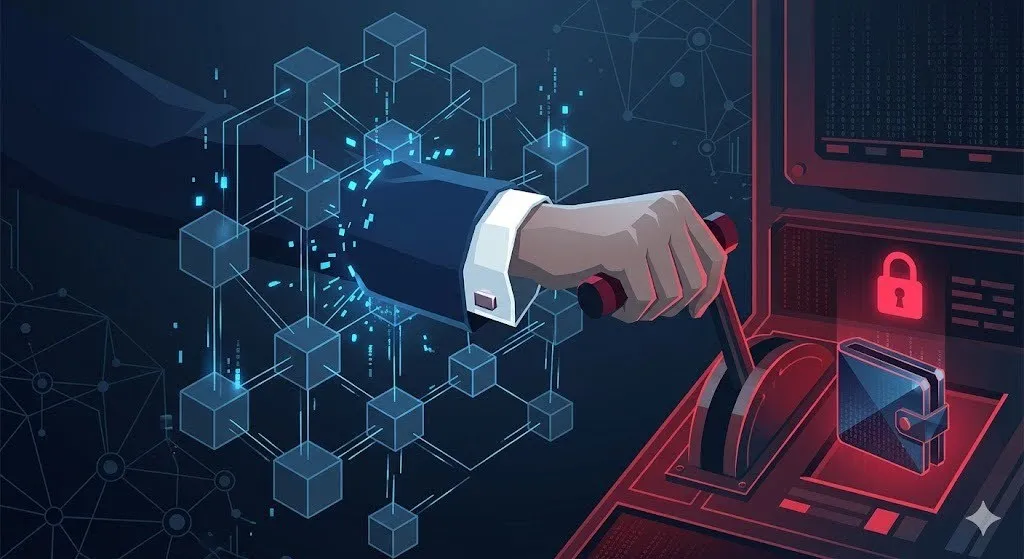
WLFI Dolomite + Justin Sun World Liberty Financial borrowed $150 million in stablecoins against its own token on a platform built by one of its own executives.
World Liberty Financial, the crypto venture backed by the Trump family, is having a very bad week. Two separate controversies have collided in public, and together they tell a story that is difficult to characterise as anything other than a systematic pattern of insiders extracting value from a project while everyone else absorbs the consequences.
Here is the full picture.
The Setup
WLFI launched in September 2025 as a decentralised finance platform. The pitch was straightforward: a DeFi protocol that would promote financial freedom, remove intermediaries, and bring the benefits of decentralised finance to mainstream Americans. The project raised over $550 million in its presale. Institutional buyers came in. Crypto foundations signed token swap agreements. Justin Sun, founder of Tron, invested $75 million and called it "one of the biggest and most important projects in crypto."
From the beginning, the structure raised questions that the project never fully answered. Dolomite, the lending protocol at the centre of the current controversy, was co-founded by Corey Caplan, who is also an adviser to World Liberty Financial. WLFI launched World Liberty Markets in January 2026 in partnership with Dolomite. The arrangement effectively means WLFI built its flagship DeFi product on infrastructure created by one of its own executives.
That detail matters a great deal for what came next.
Borrowing Against Their Own Token
On-chain records show that WLFI's treasury deposited roughly 5 billion WLFI tokens onto Dolomite, using those tokens as collateral to borrow stablecoins. More than $40 million of the borrowed funds were transferred to Coinbase Prime, an institutional platform typically used for converting crypto to fiat or for OTC trading. The timing raised immediate questions. The funds moved shortly before President Trump announced a ceasefire between the United States and Iran, prompting analysts to ask whether WLFI had advance knowledge of a market-moving event.
The numbers are significant. WLFI lent $406.23 million of its own token across two wallets, representing 4.99% of total supply and 97.8% of WLFI's cap on Dolomite, borrowing a total of $150 million in USDC and other stablecoins including its own USD1. To put it plainly: they created a token, used it as collateral, and borrowed real money against it, through a platform their own adviser built.
WLFI now constitutes over half of Dolomite's total liquidity. The USD1 pool is running at a 93% utilisation rate. World Liberty Financial borrowed so much USD1 from Dolomite that there is very little left to borrow, meaning users who previously deposited the stablecoin may have trouble withdrawing. Regular depositors who put their money into Dolomite to earn yield are now stuck behind a position controlled entirely by insiders.
Nicolas Vaiman, CEO of crypto analytics firm Bubblemaps, told Fortune that roughly 5% of WLFI's supply sitting as collateral on Dolomite creates a serious liquidation risk. If WLFI declines significantly in value, the collateral gets liquidated, forcing World Liberty to sell WLFI tokens to repay the loan, which then puts further downward pressure on a price already in freefall.
DeFi researcher Naeven mapped out the loop on X: WLFI deposited its own tokens, borrowed stablecoins, and structured the position in a way that made yields appear higher than they were organically. X user EthanDeFi was direct: "If that WLFI collateral position ever gets close to liquidation, it's basically unliquidatable without major losses for lenders. If you have any USD1 or other stablecoins lent on Dolomite, my advice is to withdraw immediately." DeFi analyst Ignas warned the borrowing may ultimately prove unrepayable given WLFI's thin market depth.
The comparisons to past DeFi collapses arrived quickly. In June 2024, Curve Finance founder Michael Egorov was forced into roughly $80 million in CRV liquidations after borrowing nearly $100 million in stablecoins using his own governance token as collateral, effectively cashing out without selling. The playbook here follows that episode closely.
When Arkham Intelligence posted the on-chain data publicly, the replies came fast. X user @lockintrade wrote: "nothing says confidence in your project like immediately using it as collateral to borrow actual money." @anglio kept it shorter: "create a token that's useless to borrow free USD. Smart crime."
World Liberty Financial pushed back and called the concerns FUD. "We are nowhere near liquidation. Frankly, even if markets moved dramatically against us, we would simply supply more collateral. That is not a risk. That is how this works." They framed themselves as the "anchor borrower" generating yield for other users, pointed to $159.5 million in annualised revenue from USD1, and disclosed spending $6.558 million buying back 43.5 million WLFI tokens over six months.
The buyback disclosure landed badly. The token now trades roughly 48% below the buyback average, meaning WLFI's own treasury purchases are significantly underwater. The token dropped 12% to its lowest level since launch the same day the team published its defence.
The Backdoor Nobody Disclosed
While the Dolomite story was developing, Justin Sun broke his silence on a separate grievance that has been building since September 2025.
Sun invested $75 million into World Liberty Financial in 2024. He was publicly enthusiastic, attended a Trump dinner for top TRUMP memecoin buyers, and received a "Trump Golden Tourbillon" watch. On the day WLFI tokens began trading he posted his conviction and stated he had "no plans to sell our unlocked tokens anytime soon." At the token generation event, his total position was valued near $700 million.
Three days after trading began, WLFI's price had collapsed nearly 45% from its all-time high. On September 4, 2025, blockchain monitoring platforms flagged outbound transfers from a Sun-linked address. According to on-chain data analysed by Wu Blockchain and Arkham Intelligence, Sun transferred approximately 50 to 60 million WLFI tokens worth around $9 million to new wallets, with some moving toward HTX, the exchange Sun himself owns.
Within hours, WLFI's controlling address called the guardianSetBlacklistStatus function on the WLFI token contract, freezing the Sun-linked address entirely. The freeze locked approximately 595 million unlocked tokens worth over $100 million at the time, along with his 2.4 billion still-vesting tokens.
Sun responded on X, saying the transfers were routine exchange deposit tests involving tiny amounts that "could not possibly have any impact on the market." WLFI's response was brief: "We do not seek to blacklist anyone. We respond when alerted to malicious or high-risk activity that could harm community members."
Seven months later, Sun's tokens remain frozen. The value of his locked holdings declined by approximately $60 million as WLFI's price continued falling. This week, he published a full statement.
"What was never disclosed — to me or to any investor — is that World Liberty embedded a backdoor blacklisting function in the smart contract used to deploy WLFI tokens. This function gives the Company unilateral power to freeze, restrict, and effectively confiscate the property rights of any token holder, without notice, without cause, and without recourse. This is the opposite of decentralisation. This is a trap door marketed as an open door."
The blacklist function was added to the smart contract just one week before the token became transferable. It was not mentioned in any public documentation available to investors. No governance vote approved its creation. The WLFI team inserted it quietly, giving themselves the power to freeze any wallet at any time with no disclosure requirement and no appeal process. Sun was not the only target. By the time his address was frozen, 272 other wallets had already been blacklisted for similar reasons.
Analyst Shanaka Anslem Pereira responded to the original freeze in September: "WLFI just proved DeFi isn't decentralised at all. It can be blacklisted, frozen, shut down." The comparison drawn by multiple commentators was to IMF-style asset freezes, the exact thing DeFi was explicitly built to make impossible.
The Bigger Picture
Sun is not a universally sympathetic figure. He has an active SEC case, and the WLFI team cited the risk of regulatory complications from maintaining close ties to him as part of their justification for the freeze. Reasonable people can debate whether his token transfers were innocent tests or an attempted exit.
But his specific complaint is not personal. It applies to every person who bought WLFI.
A project that secretly embeds a centralized kill switch into its token contract, without disclosing it to investors, without a governance vote, and without any appeal process, is not a decentralised finance platform. It is a traditional financial institution wearing different clothes, with fewer legal protections for the people who trusted it.
The Dolomite borrowing showed that WLFI was using retail depositors as a liquidity cushion while insiders extracted stablecoin loans against their own tokens. The blacklist function shows that even after buying the token, the team retains the ability to decide unilaterally whether you are allowed to use it.
Together, these two stories are not separate controversies. They are the same project, operating by the same logic: insiders control the infrastructure, insiders set the rules, and when the rules become inconvenient, insiders change them. Retail participants, whether they are depositors on Dolomite or token holders with frozen wallets, provide the capital and absorb the losses.
Sun ended his statement with a demand: "Unlock the tokens and uphold transparency for the community. Let's build with integrity, not misconduct."
World Liberty Financial has not responded.