XRP vs Bitcoin: Quantum Risk Debate Emerges; Why Key Exposure Data Could Matter for Investor


For years, Bitcoin has stood as the gold standard of crypto security—trusted, battle-tested, and seemingly unbreakable. But a new debate is beginning to challenge that assumption.
For years, Bitcoin has stood as the gold standard of crypto security—trusted, battle-tested, and seemingly unbreakable.
But a new debate is beginning to challenge that assumption.
As quantum computing inches closer to reality, fresh data suggests that XRP may have a structural advantage—raising an uncomfortable question for investors:
What if the biggest risk to crypto isn’t market volatility… but the technology that secures it?
What Is a Quantum Attack — And Why It Matters
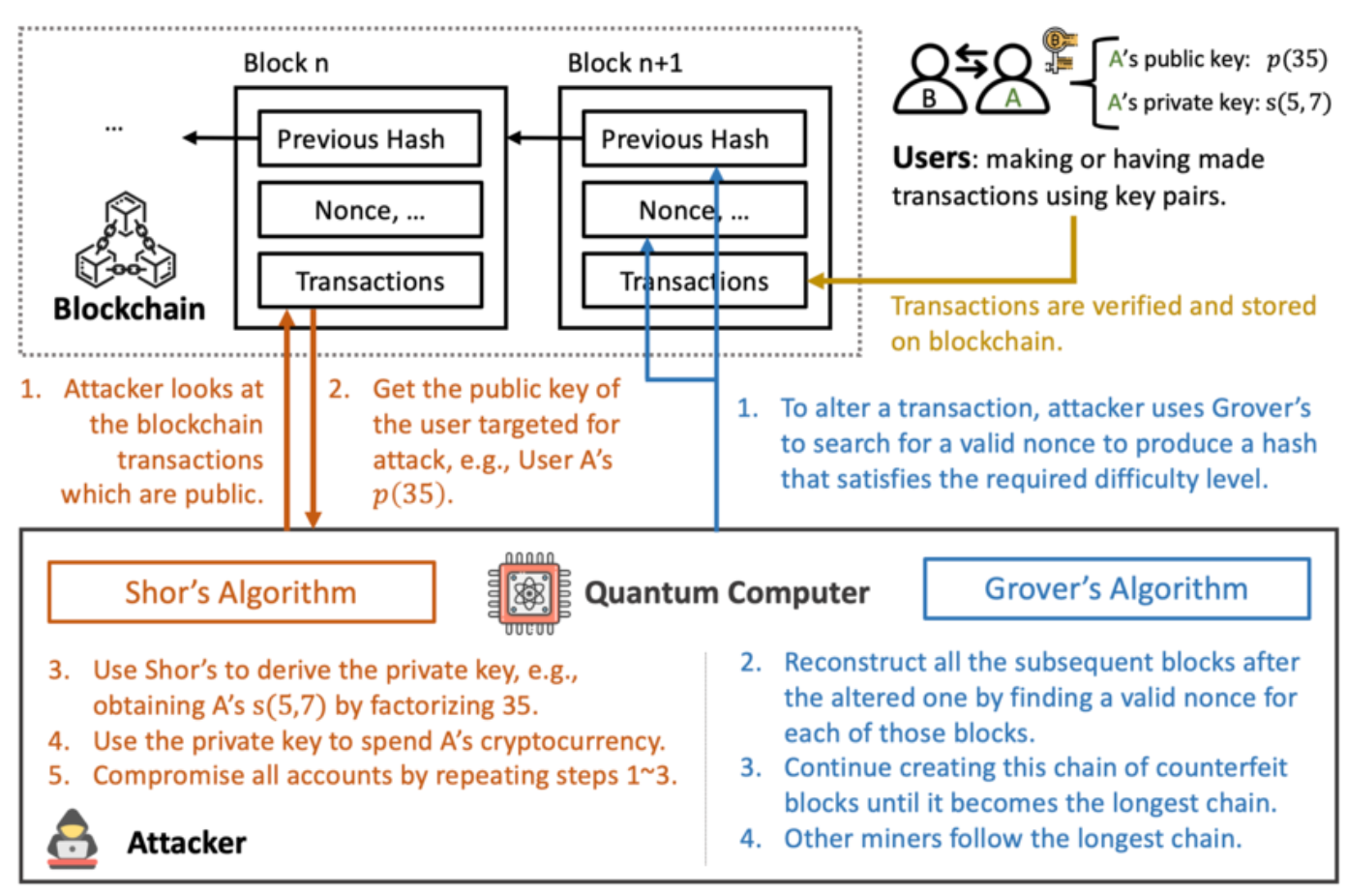
A quantum attack refers to the potential use of advanced quantum computers to break the cryptographic systems securing blockchains.
Cryptocurrencies like Bitcoin and XRP rely on elliptic curve cryptography to protect wallets and transactions—something traditional computers cannot realistically crack.
However, quantum machines could theoretically use algorithms like Shor’s algorithm to derive private keys from public keys, potentially allowing attackers to access wallets and move funds.
While no quantum computer today can do this, the risk lies in future breakthroughs—especially since some wallets have already exposed their public keys, making them more vulnerable if that day comes.

The Emerging Quantum Risk Debate
Amid growing concerns about quantum threats, analysts are now comparing how different cryptocurrencies would hold up under such an attack—and the findings are unexpected.
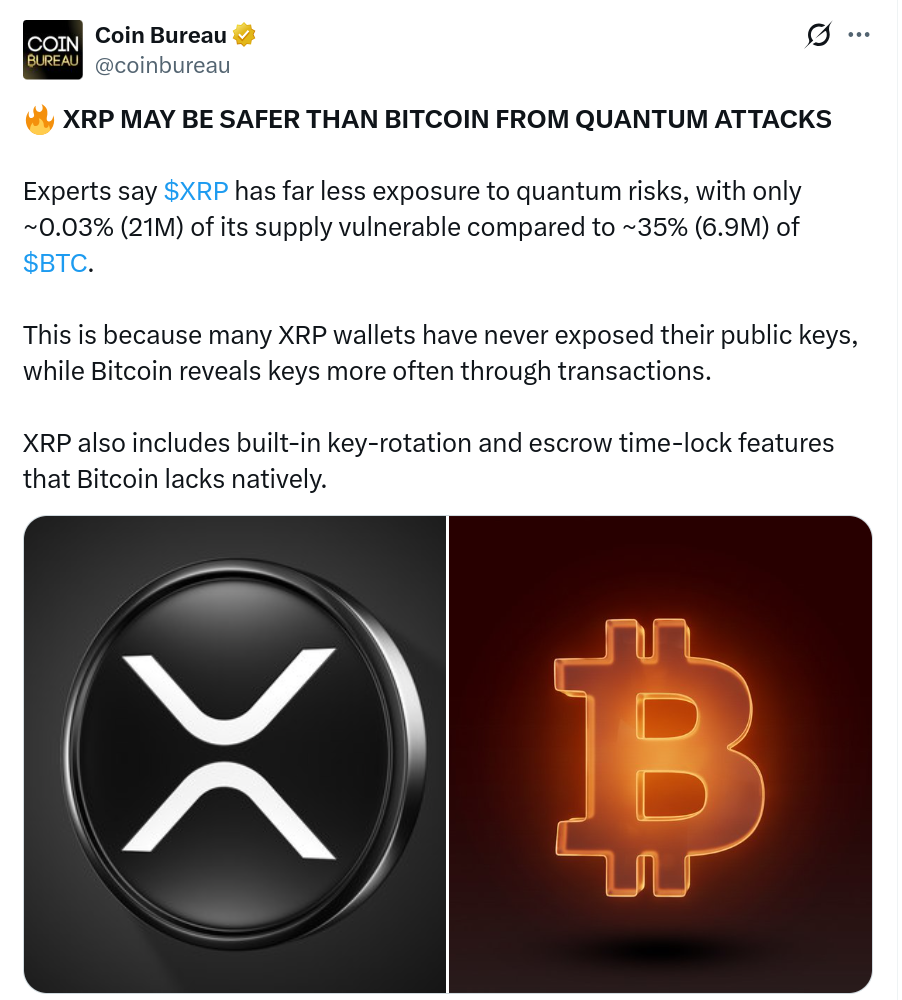
Recent analysis suggests that XRP may have significantly lower exposure to quantum risks than Bitcoin. The key difference lies in public key exposure, a critical vulnerability in a quantum scenario.
Estimates indicate that only about 0.03% of XRP supply is potentially exposed, compared to 11%–37% of Bitcoin’s supply. This gap stems from the fact that many Bitcoin wallets have revealed their public keys through past transactions, while a much smaller portion of XRP accounts have done so.
In a post-quantum world, that structural difference could prove crucial.
The Hidden Vulnerability in Bitcoin’s Design
This vulnerability is rooted in how early crypto systems were designed.
Bitcoin, launched in 2009, prioritized decentralization and simplicity—but not future quantum resistance.
Over time:
- Many Bitcoin wallets reused addresses
- Public keys became exposed after transactions
- Dormant wallets (including early holdings) remain vulnerable
Meanwhile, XRP took a different architectural approach:
- Accounts don’t automatically expose public keys
- Many wallets have never revealed their keys on-chain
- The system allows key rotation without moving funds
This difference, once overlooked, is now becoming critical.
Why It’s Happening Now
So why is this topic suddenly trending?
1. Quantum Breakthroughs Are Accelerating
Major tech players are making rapid progress. Some estimates now suggest quantum systems could break crypto encryption much sooner than expected
2. “Harvest Now, Decrypt Later” Fear
Attackers may already be collecting encrypted blockchain data today—planning to decrypt it once quantum machines become powerful enough
3. Institutional Risk Awareness
Wall Street is beginning to take this threat seriously. Even traditional finance analysts have flagged quantum computing as a long-term risk to Bitcoin
This is shifting the conversation from hype to infrastructure security.
Can Bitcoin Adapt to a Quantum Future?
Despite the concerns, Bitcoin is not defenseless. Developers have long discussed potential upgrades to make the network quantum-resistant.
One solution is migrating to post-quantum cryptography—new encryption methods designed to withstand quantum attacks. This would likely require a major protocol upgrade, potentially even a soft or hard fork, to replace current signature schemes.
There are also practical steps users can take:
- Avoid address reuse
- Move funds to newer wallet types
- Use addresses that haven’t exposed public keys
However, the challenge lies in coordination. Upgrading Bitcoin’s security would require broad consensus across a decentralized network, making the transition slow and complex. Until then, legacy wallets with exposed keys remain a theoretical risk in a quantum-capable future.
Why XRP May Be Better Positioned
While Bitcoin may require upgrades, XRP already has structural features that limit its quantum exposure.
Unlike Bitcoin, XRP accounts do not automatically reveal public keys, meaning many wallets have never exposed the data needed for a quantum attack. As a result, overall key exposure is significantly lower across the network. XRP also allows key rotation without moving funds, reducing reliance on address reuse.
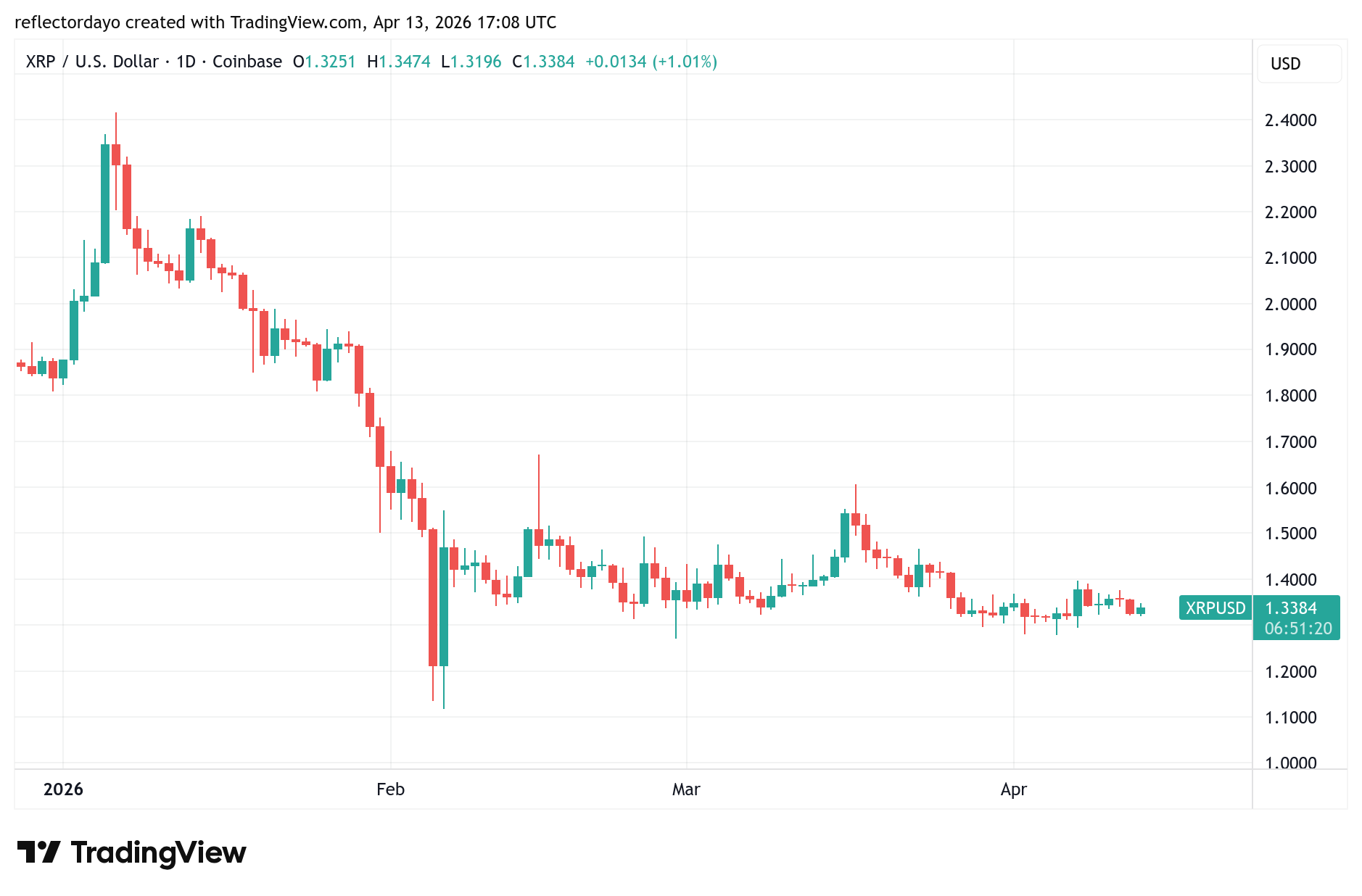
Following bearish pressure at $1.30 on February 24, buyers have held support, keeping the price in a sideways range.
However, a narrowing channel now signals reduced volatility—often a precursor to a major breakout, suggesting a strong move may be imminent.
XRP Statistics Data
- XRP Current Price: $1.34
- XRP Market Cap: $82.25 billion
- XRP Circulating Supply: 61.4 billion
- XRP Total Supply: ∞
- XRP Market Ranking: #5