Balancer (BAL)

How to Buy Balancer (BAL) on LBank

Learn how to buy Balancer (BAL) on LBank, including payment methods such as credit cards, debit cards, Apple Pay, and bank transfers, as well as the purchase process, preparations, and FAQs.

Step 1
Download the LBank App
Please download the LBank App and register to get started
Step 2
Fund your account
Deposit using your preferred payment method.
Step 3
Choose your cryptocurrency
Select the crypto you want to buy from over 3,000,000 cryptocurrencies available on LBank Exchange or Wallet.

Purchase Decision Overview

Credit / Debit Card

Credit / Debit Card

Fee
Variable Fees
Processing Time
Usually within 1 minute, up to 48 hours
Minimum Purchase Amount
Starting from approx. 10–15 USD
Supported Regions
Subject to region, fiat currency, issuing bank, and payment channel support
Bank Transfer / Local Transfer

Bank Transfer / Local Transfer

Fee
Variable Fees
Processing Time
Depends on the payment method; some local channels may be faster
Minimum Purchase Amount
Starting from approx. 1–10 USD
Supported Regions
Subject to local payment channel support

Three Simple Steps to Buy BAL on LBank

Register an LBank account

How to Buy BAL on LBank: Payment Methods Overview

Explore the available payment methods for buying BAL on LBank, including credit card, debit card, bank transfer, Apple Pay, Google Pay, PayPal, and P2P, to quickly choose the most suitable way to buy BAL.

Credit / Debit Card
Credit / Debit Card
Processing Time: Usually within 1 minute; up to 48 hours
Use a Visa/Mastercard that supports international online transactions and ensure 3D Secure is enabled; if it fails, try a different card or try again later
Common Reasons for Failure: The issuing bank declined the cryptocurrency transaction; insufficient balance; 3D Secure verification failed; risk control interception; or region/card network not supported
Bank Transfer / Local Transfer
Processing Time: Instant or 1–3 Business Days
Verify the receiving account, reference code, and transfer network, and use a bank account consistent with your identity verification
Common Reasons for Failure: Incorrect receiving information or reference code; name mismatch; bank processing delay; or unsupported transfer network

What Do You Need to Prepare Before Buying Balancer (BAL) on LBank?

Check the preparations required before buying Balancer (BAL) on LBank, including account registration, identity verification (KYC), payment methods, regional availability, and pre-purchase precautions to help you smoothly complete the BTC purchase process.

Suitable for
Users who want to quickly buy BAL with fiat
Before You Buy: Checklist
Register and log in to your account
Complete required KYC
Prepare payment method
Confirm regional availability,Check limits / fees / processing time
User Path
Buy Crypto

How to Buy Balancer on LBank – Step-by-Step Guide

Before you begin, decide how you’d like to pay:

Pay with fiat

If you're new to crypto, using fiat currency (such as USD, EUR, etc.) is the easiest way to buy Balancer. LBank supports various payment methods, including debit cards, credit cards, bank transfers, and other local payment options where available. You may need to fund your LBank account before making a purchase.

Pay with other cryptocurrencies

If you already hold other cryptocurrencies, you can trade them for Balancer on LBank. Please make sure that LBank supports the trading pair you need (e.g., Bitcoin (BTC)). LBank offers a wide range of trading pairs, allowing you to conveniently convert your existing crypto into Balancer.

LBank supports multiple payment methods

You can use the following payment methods to purchase Balancer on LBank:

Debit card
Credit / Debit Card
PayPal
Apple Pay
Google Pay

Mobile app guide

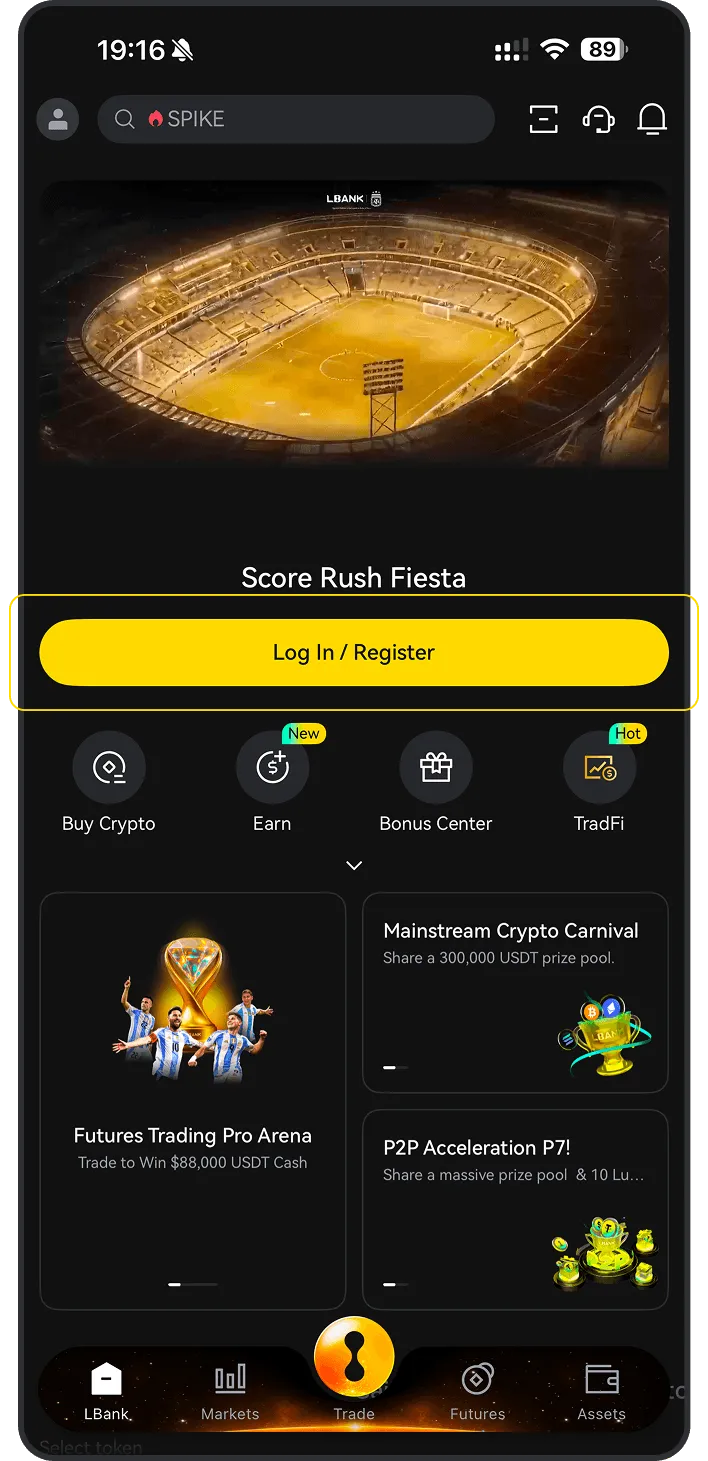
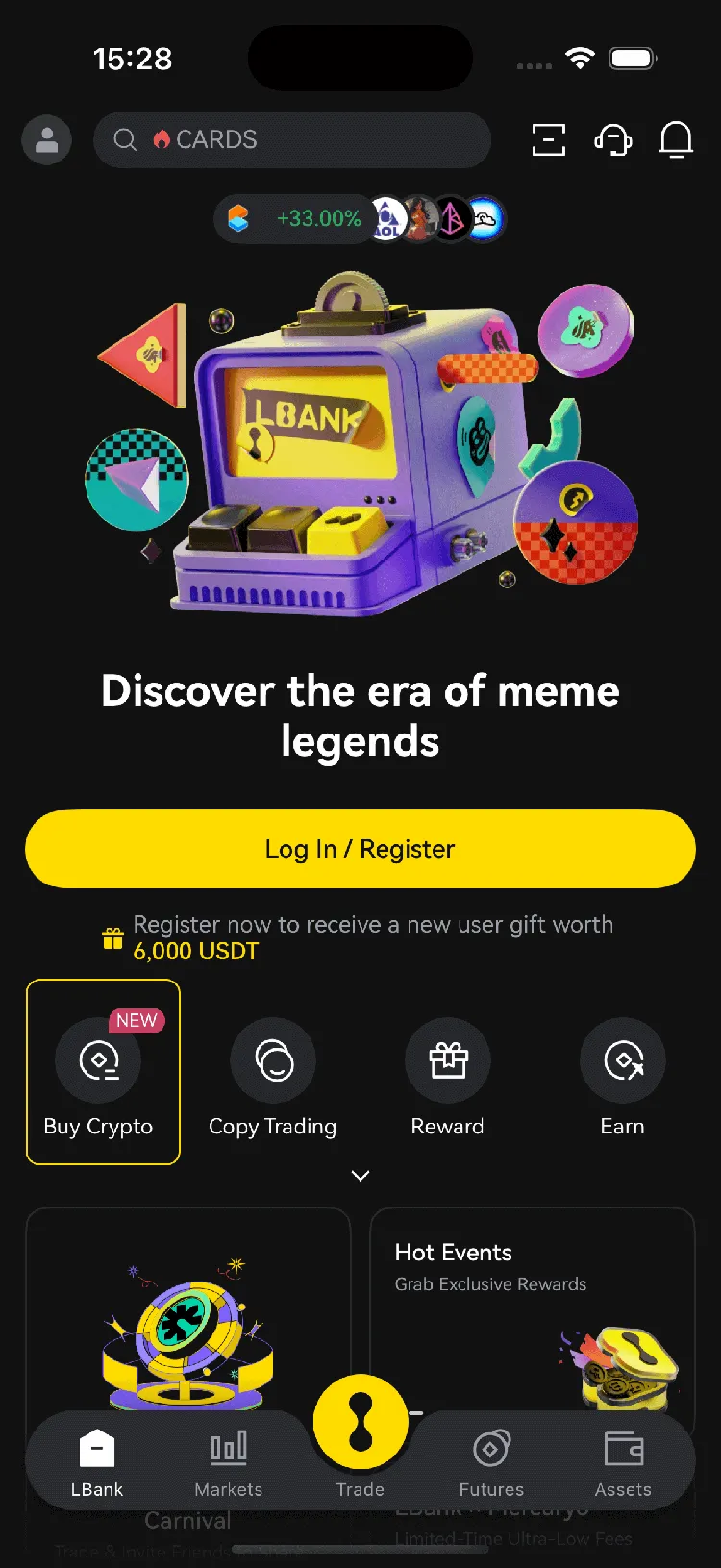
1
Open the LBank mobile app and tap “Buy Crypto”
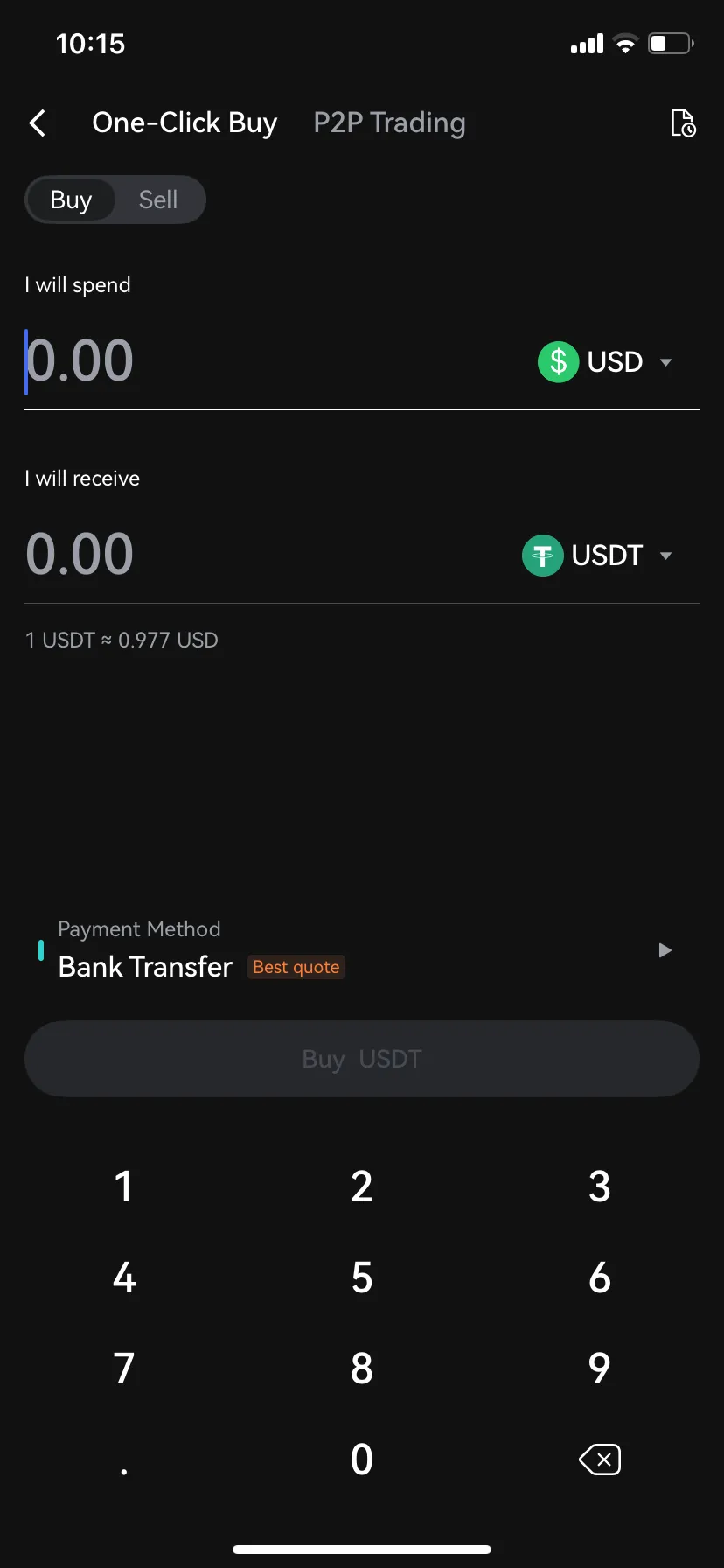
2
Select “Buy”
3
Choose , enter the fiat currency you want to use, input the amount, then tap “Buy” or “Confirm”

Desktop guide

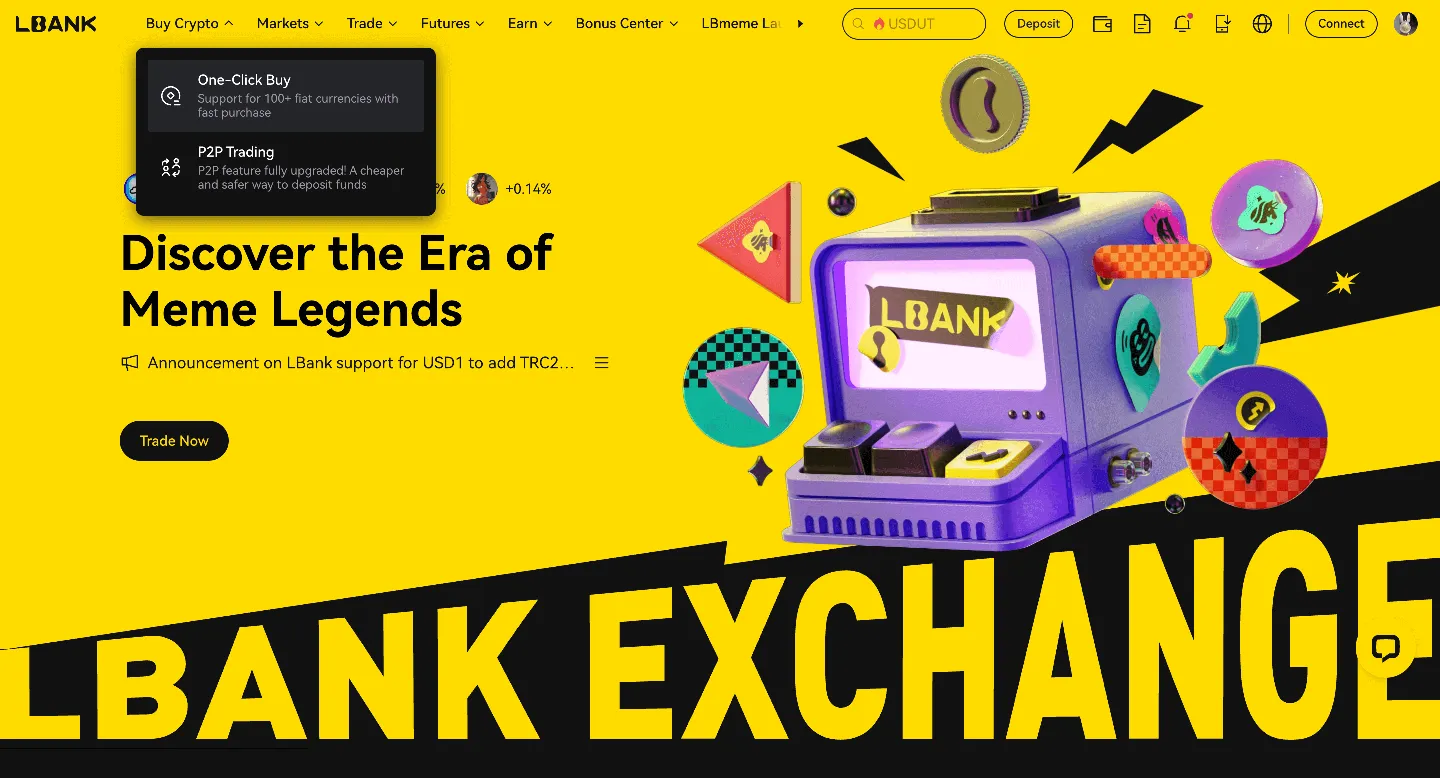
1
Log in to LBank on your desktop browser and click the “One-Click Buy” option.
2
Under the “One-Click Buy” tab:

(a). Choose the fiat currency you want to use

(b). Select the Balancer you want to purchase

(c). Enter an amount or use quick-select options (e.g., 100, 200, 500, max)
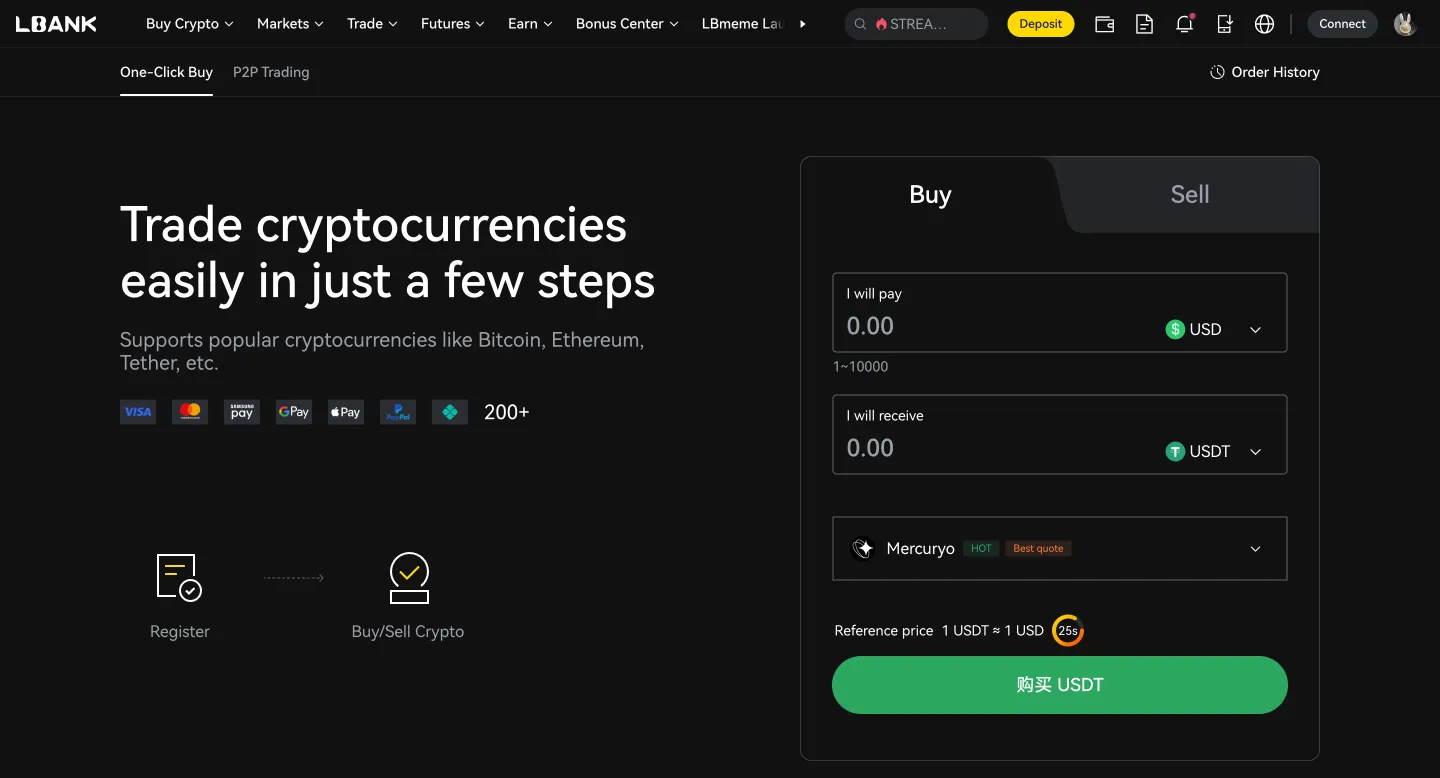
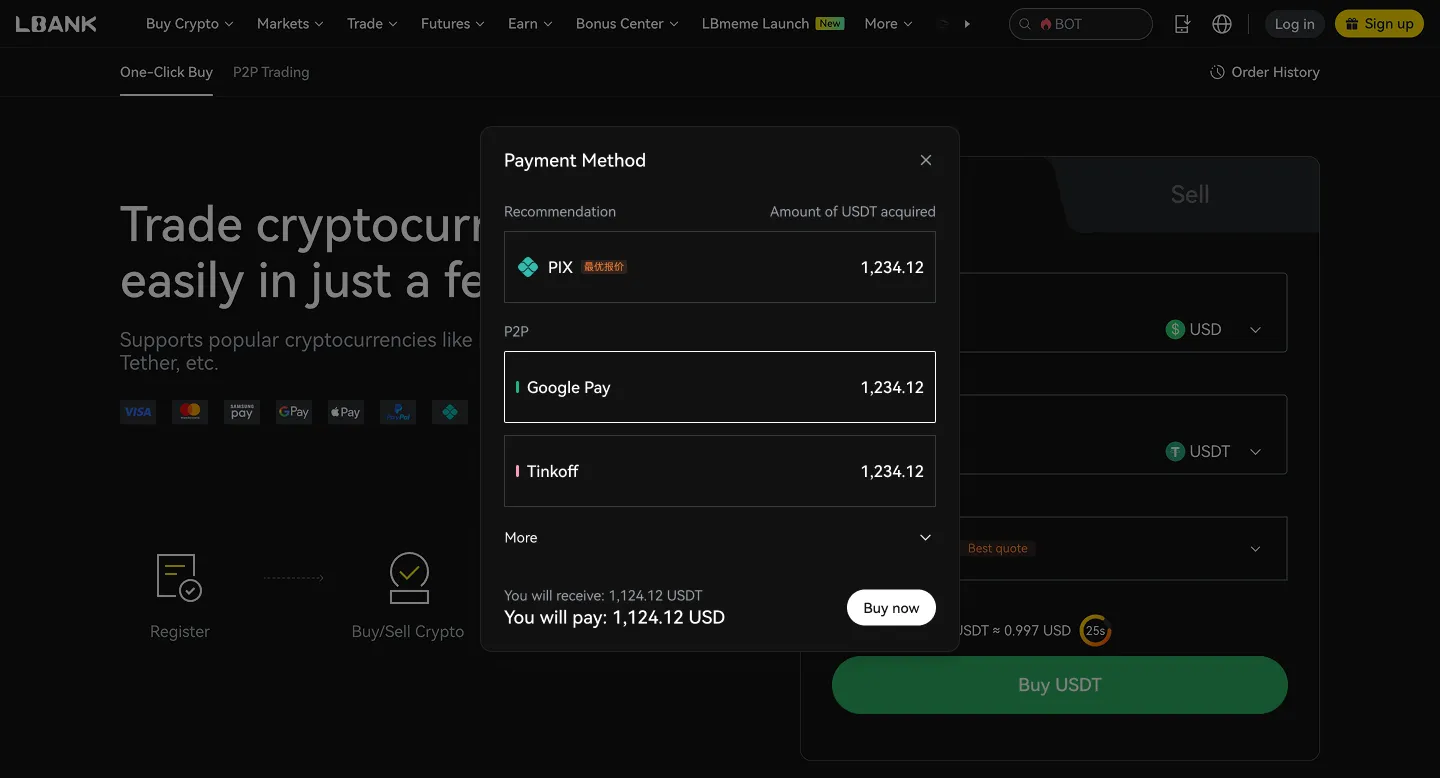
(d). Choose your payment method
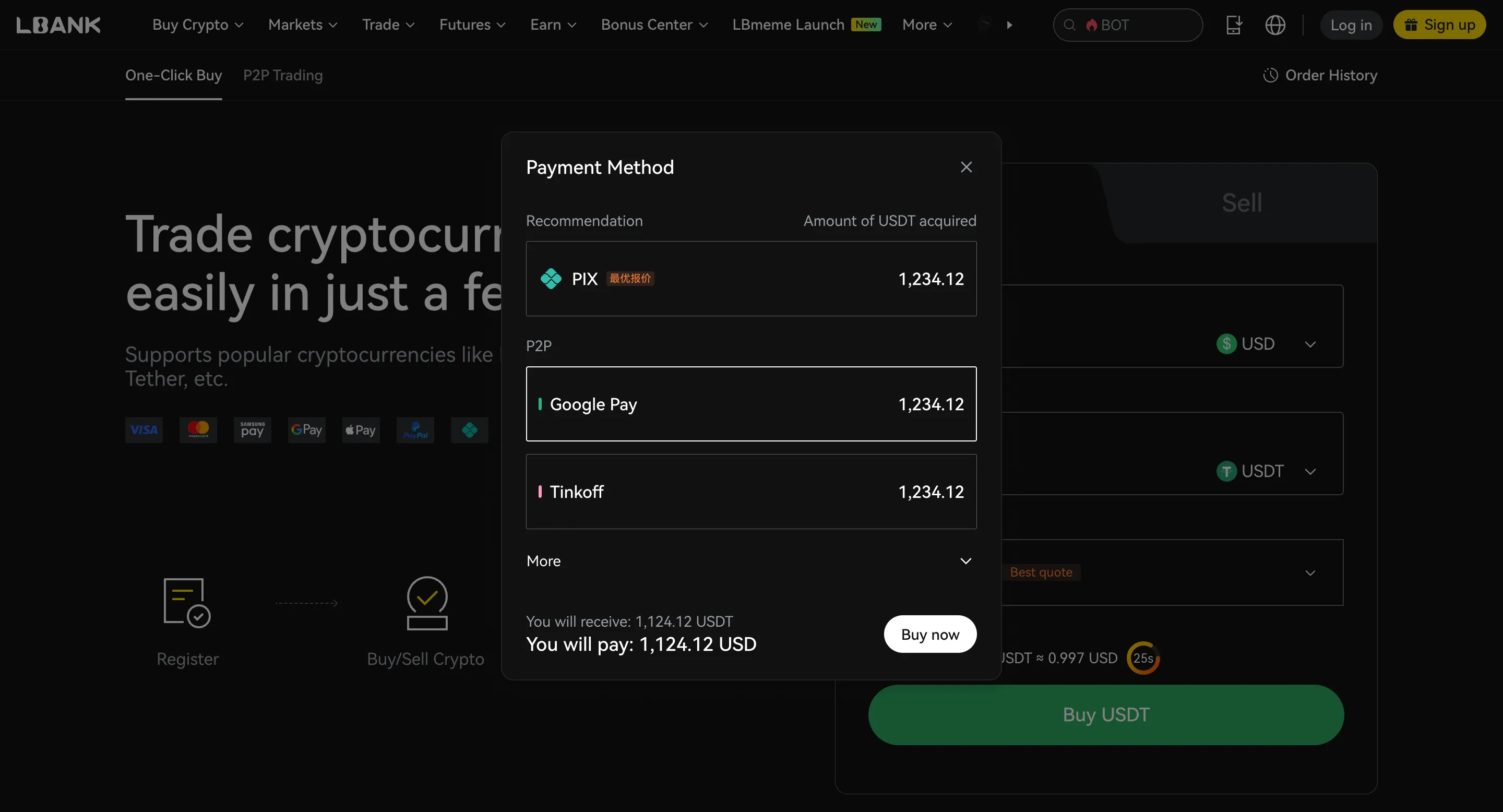
(e). Click “Confirm” or “Buy now”
P2P Trading

Merchant
Price
Amount | Limit
Payment Method
Action
LO
Loyalty_Trader
493 min | 100%
0.918 USD
7763.29 USDT
500.000 - 7100.000USD
Bank Transfer
YY
YYDS_Trader
1015 min | 100%
0.954 USD
1000.00 USDT
400.000 - 900.000USD
Bank Transfer
AM
AMG_Trading
724 min | 100%
0.954 USD
7268.52 USDT
200.000 - 6647.968USD
Bank Transfer

What is Balancer (BAL)?

Balancer is a decentralized automated market maker protocol built on the Ethereum blockchain that functions as both a decentralized exchange and a self-balancing portfolio management tool. Launched in 2020 by Balancer Labs, it was designed to provide a flexible alternative to traditional decentralized exchanges by allowing users to create or participate in liquidity pools with highly customizable parameters. Unlike many other automated market makers that restrict pools to only two assets in equal proportions, Balancer allows for pools containing up to eight different tokens. Creators of these pools can set specific weights for each asset, such as a pool with forty percent of one token and sixty percent of another. This structure effectively turns liquidity pools into self-balancing index funds. As the prices of the underlying assets change, the protocol uses mathematical formulas to trigger trades that rebalance the pool, ensuring it maintains the user-defined ratios. There are three primary types of pools within the ecosystem. Public pools are open to any user for providing liquidity and have fixed parameters that cannot be changed after creation. Private pools are managed by a single entity that can adjust all parameters, including weights, fees, and the assets accepted. Smart pools are controlled by smart contracts, allowing for even more complex logic and dynamic adjustments. The native token of the project is BAL, which serves primarily as a governance token. Holders of BAL can participate in the decision-making process for the protocol by voting on proposals that affect its future development and operation. A more recent evolution of this system involves veBAL, or voting-escrow BAL, which requires users to lock their tokens to gain increased voting power and other protocol benefits. This governance model ensures that the platform remains community-driven and decentralized. Beyond simple token swaps, Balancer provides infrastructure for other Web3 projects. It features a smart order router that scans all available pools to find the most efficient paths for trades, reducing costs for users. The protocol has also expanded to multiple blockchain networks, including Polygon and Arbitrum, positioning itself as a core liquidity layer for the broader decentralized finance ecosystem. Its modular architecture, particularly in its more recent versions, allows developers to build specialized pool types and financial products on top of the base protocol. Learn more

Is Balancer (BAL) a good investment?

Whether Balancer (BAL) is a good investment depends on your personal financial situation and risk tolerance. Cryptocurrency investments are speculative and can be highly volatile.


Before investing in Balancer (BAL) or any cryptocurrency, consider the following:

Your financial goals
Are you seeking short-term gains or long-term growth?
Your risk tolerance
Your risk tolerance
How much potential loss are you comfortable with?
Diversification
Diversification
Don’t put all your eggs in one basket. Spread your investments across different types of assets.
Your goals and time horizon
Cryptocurrencies are best suited for long-term investors. Disclaimer: This is not financial advice. Please do thorough research before making any investment decisions.

Fees, limits, and processing time for buying BAL on LBank

Compare fees, transaction limits, and estimated processing times across different payment methods. Actual fees and availability may vary by region, fiat currency, payment method, and third-party providers. Please refer to the order page for final details.

ROI calculator

If I invest, how much profit will I make?
Invest
$
Enter
BAL
Date
2026-06-07
You will earn $-- in profit, with an ROI of --

What can you do with Balancer (BAL)?

Investment
Buy and hold Balancer (BAL), expecting its value to increase over time.
Investment
Trade
Actively trade Balancer (BAL) on LBank to profit from price fluctuations.
Trade
Pay
Use Balancer (BAL) to pay for goods and services where accepted.
Pay

Why is LBank the best platform to buy Balancer (BAL)?

User-friendly interface
LBank offers a simple and intuitive platform for buying and selling Balancer (BAL).
Competitive fees
Competitive fees
LBank provides competitive trading fees for Balancer (BAL).
Secure platform
Secure platform
LBank applies robust security measures to protect your funds.
Diverse trading pairs
LBank offers a wide range of trading pairs for Balancer (BAL).
24/7 customer support
LBank provides customer support to help you with any questions or issues.
Mobile app
Mobile app
Trade Balancer (BAL) anytime, anywhere using the LBank mobile app.
High liquidity
High liquidity
LBank offers excellent liquidity for Balancer (BAL) trading, ensuring you can easily buy and sell your crypto assets.
Regulatory compliance
LBank complies with all regulatory requirements in the jurisdictions where it operates to ensure a compliant and secure trading environment

After buying BAL, what is the best way to store it?

After buying BAL, you can choose a storage method based on your usage frequency, holding period, and security needs. If you need to trade at any time, you can store it in your LBank account. If you prioritize self-custody or long-term security, consider using a personal wallet or a hardware wallet.

Store in your LBank account

Store in your LBank account

Suitable for
Users who want to trade or convert at any time
Short-term BTC holders
Features
Ready to use immediately after purchase; easier to use
Ideal for frequent trading, conversions, or using platform features
Security Alert
Please enable 2FA
Please set an anti-phishing code
Only log in through official channels
Transfer to a personal hot wallet

Transfer to a personal hot wallet

Suitable for
Users who want to manage their own assets
Users who need daily transfers or on-chain usage
Features
More flexible; convenient for daily transfers and management
Better suited for small holdings and everyday use
Security Alert
Do not store seed phrases or private keys in the cloud
Do not save sensitive information via chat tools, email, or screenshots
Stay alert for phishing websites and fake wallet apps
Transfer to a hardware wallet

Transfer to a hardware wallet

Suitable for
Long-term BTC holders
High-value holders who prioritize security
Features
Private keys are stored offline, offering enhanced security
Ideal for long-term storage of infrequently moved assets
Security Alert
Securely back up seed phrases offline
Never disclose your recovery phrase to anyone
Assets may be irrecoverable if the seed phrase is lost

News section

More
The Daily: Balancer Labs to wind down, Bernstein calls bitcoin bottom with $150K target for 2026, and more
Balancer Labs, the corporate entity behind the DeFi protocol Balancer, is winding down after a $128 million exploit created “real and ongoing legal exposure” for the firm.Bernstein analysts said bitcoin has likely bottomed, underpinning its bullish thesis for treasury firm Strategy as a leveraged play on the upside.In a forum post on Monday, co-founder Fernando Martinelli said the technology remains intact, but flawed tokenomics and repeated security incidents eroded trust.Martinelli had considered a complete protocol shutdown, but pointed to recent performance metrics, noting that Balancer has generated more than $1 million in annualized fees.Instead, the protocol will continue operating under a leaner structure, shifting toward DAO-led governance and a service provider model.The restructuring plan proposes ending BAL (BAL) emissions, sunsetting veBAL, and redirecting 100% of fees to the DAO treasury. Core contributors are expected to move to a new entity, Balancer OpCo, pending governance approval.Leadership said the next 12 months will be critical as Balancer attempts to prove sustainable product-market fit and rebuild confidence.The decision follows a November attack that affected Balancer v2 pools across multiple chains, which was attributed to a rounding flaw in its swap logic.The analysts projected a potential 226% rise for Strategy with a $450 price target, citing its resilient balance sheet and 3.6% share of bitcoin supply.Bernstein argued that Strategy's increasing shift to perpetual preferred instruments like STRC reduces volatility risk and provides non-dilutive, long-term capital for continued bitcoin accumulation.The analysts also reiterated a $150,000 bitcoin price target for the end of 2026 and see a cycle peak of $200,000 in 2027.The initiative advances NYSE's January plan to launch a 24/7 tokenized securities venue, formalizing a key piece of its infrastructure.Securitize will handle the creation and management of tokenized shares, leveraging its experience working with institutions like BlackRock.The collaboration reflects a broader Wall Street push into tokenization, as exchanges and regulators increasingly move to support digital securities experimentation.Executives said the audit will provide a comprehensive review of Tether's financials, including assets, liabilities, and internal controls.The company did not disclose the auditor's name in its Tuesday announcement, though candidates include Deloitte, PwC, EY, and KPMG.Deloitte has previously issued a reserve attestation for Tether-linked USAT — a U.S.-regulated stablecoin issued via Anchorage Digital — though that review was limited to a point-in-time snapshot and did not extend to USDT or Tether's broader finances.The move comes as Tether scales globally and seeks to address long-standing scrutiny over its reserve transparency.Meanwhile, shares in rival Circle fell 20% on Tuesday amid proposed limits on stablecoin rewards and reports that the firm froze USDC in 16 wallets tied to an ongoing U.S. civil case.Fink emphasized that tokenization can improve access, liquidity, and efficiency by making assets easier to issue, trade, and fractionalize.His comments come as regulators and major institutions accelerate efforts to test and integrate tokenized securities into traditional markets.UK CPI and PPI data are due at 3 a.m. ET on Wednesday. U.S. mortgage data follows at 7 a.m.AltLayer and Acala are among the crypto projects set for token unlocks.Next Block Expo and Digital Asset Summit continue. Crypto Assets Conference 2026 kicks off in Frankfurt.
2026-03-25
Balancer Labs to shut down after $128 million exploit; protocol eyes 'lean' restructuring
Balancer protocol’s corporate entity is shutting down after over $128 million was drained in an exploit last November.Its co-founder, Fernando Martinelli, said the protocol will continue to operate after restructuring to attain a “lean” economic model.
2026-03-24

Balancer (BAL) FAQ

Balancer stands out with its highly flexible liquidity pools. Unlike many traditional AMMs that typically restrict pools to two tokens in a 50/50 ratio, Balancer supports up to 16 tokens within a single pool. Furthermore, these pools allow for customizable weightings (e.g., 80% BAL / 20% WETH), enabling the creation of 'index-like' funds that automatically rebalance. This versatility offers liquidity providers greater control and allows for more complex financial strategies, making it a powerful tool for diverse asset management.
Balancer offers diverse pool types to cater to various needs. Public Pools are open for anyone to provide liquidity, with fixed parameters. Private Pools grant a single owner full control to adjust weights and fees, ideal for custom strategies. Smart Pools are managed by smart contracts, allowing for advanced features like dynamic fee adjustments or even changing the tokens within the pool. This range of options provides unprecedented flexibility and automation for both liquidity providers and pool creators within the ecosystem.
veBAL, or vote-escrowed BAL, is a core mechanism inspired by advanced tokenomics models. Users obtain veBAL by locking Balancer (BAL) and Wrapped Ether (WETH) liquidity tokens for a chosen duration. Holding veBAL grants significant utility: it empowers users to vote on "gauges," effectively directing where new BAL token emissions are distributed to specific liquidity pools. Additionally, veBAL holders earn a portion of the protocol's revenue and can significantly boost their own liquidity mining rewards, incentivizing long-term engagement and governance participation.
Balancer V3, launched on December 11, 2024, brings several major advancements. A key innovation is the "Boosted Pools" concept, developed in partnership with Aave, which allows capital to remain liquid for trading while simultaneously earning lending yield on idle assets. The new "Hooks Framework" offers developers extensive customization, enabling them to integrate custom logic into pools, such as dynamic fees or oracle-based pricing. Furthermore, V3 significantly improves gas efficiency by centralizing logic within a unified "Vault," reducing the cost of complex swaps for users.
Users providing liquidity to Balancer pools can earn rewards through two main mechanisms. Firstly, they receive a share of the swap fees generated by traders who utilize their specific liquidity pools. This mechanism ensures that liquidity providers are compensated for facilitating trades. Secondly, participants in certain "incentivized" pools receive weekly distributions of BAL tokens. This liquidity mining program is a significant incentive, directing protocol emissions to encourage deeper liquidity in key asset pairs and rewarding those who contribute to the ecosystem's robustness.
While Balancer offers innovative features, users should be aware of potential risks. Smart contract risk is inherent, meaning potential vulnerabilities or bugs in the protocol's code could lead to asset loss. Balancer has undergone extensive audits and maintains a bug bounty to mitigate this, but it's always a consideration. Another significant concern is asset risk, particularly in multi-token pools; if one of the constituent tokens, such as a stablecoin, de-pegs or suffers a significant value drop, it can impact the entire pool's value. Impermanent loss also exists, though Balancer's custom pool weights can sometimes reduce its impact.

How to buy other crypto assets