Key Points
- Rarible is a decentralised, community-owned NFT marketplace founded in 2020 that supports buying, selling, and minting NFTs across multiple blockchains including Ethereum, Solana, Polygon, Tezos, and Immutable X.
- Rarible's defining feature is its creator-first approach: royalties can be set as high as 50% and are enforced at the protocol level through RARI Chain, meaning no marketplace or buyer can bypass creator payments on secondary sales.
- In September 2025, Rarible shifted to a buyback model where 100% of trading fees are directed toward purchasing RARI tokens from the open market, directly connecting platform revenue to token demand.
If you have bought, sold, or researched NFTs at any point since 2020, you have almost certainly come across Rarible. It is one of the original NFT marketplaces, it has survived multiple market cycles that eliminated most of its early competitors, and it has continued shipping meaningful product while the broader NFT space contracted. Understanding what makes Rarible different from every other platform in this space starts with one word: creators.
For live RARI pricing and market data, check the LBank RARI price page.
What is Rarible?
Rarible is a decentralised NFT marketplace that allows artists, collectors, and communities to create, buy, sell, and trade non-fungible tokens across multiple blockchains. Founded in 2020 by Alexander Salnikov and Alexei Falin, the platform was designed from the start with a specific philosophy: digital creators should control their work, set their own terms, and participate in the governance of the platform they build on.
That philosophy manifests in three practical ways. First, creators can set royalty rates on their NFTs of up to 50%, meaning every time their work sells on a secondary market, they receive that percentage of the sale automatically. Second, the platform is governed by a Decentralized Autonomous Organization in which RARI token holders vote on platform changes including fee structures, new features, and policy decisions. Third, Rarible built its own Layer 3 blockchain specifically designed to enforce royalties at the node level, making it technically impossible to bypass creator payments.
The marketplace supports a wide range of digital asset types including fine art, photography, music, gaming items, collectibles, and metaverse assets. Users can mint NFTs through lazy minting, which means no upfront gas fees are required. The minting cost is only charged when the item is first purchased, lowering the barrier for new creators significantly.
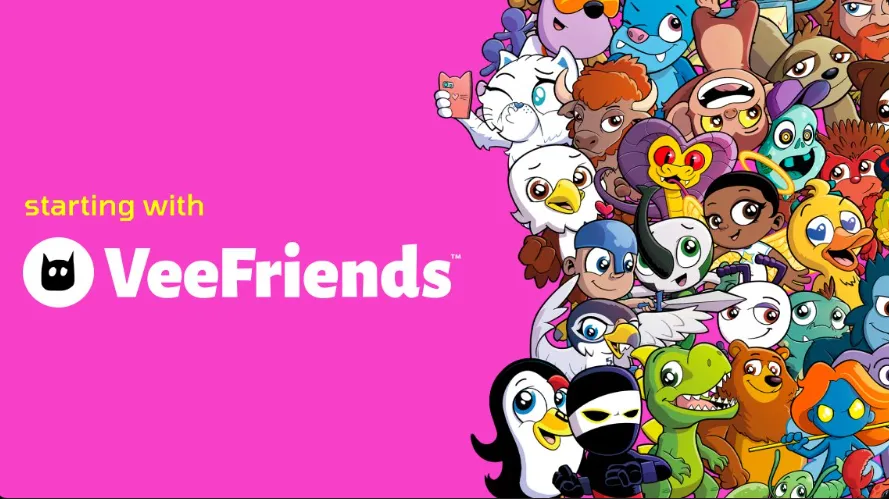
Image by Rarible showing VeeFriends
Rarible NFT News: What Has Changed in 2025 and 2026
The past year has been one of the more active development periods in Rarible's history, driven by RARI Chain growth and a meaningful shift in how the platform handles its own revenue.
The most significant structural change came in September 2025, when Rarible moved to a full buyback model. Previously, trading fees flowed into the platform treasury. Under the new model, 100% of trading fees are used to purchase RARI tokens from the open market. This creates a direct link between how much trading happens on the platform and the demand for the governance token, connecting commercial activity to token economics in a way that was not previously in place.
RARI Chain, the platform's Arbitrum-based Layer 3 blockchain, has continued expanding. In January 2024, the RARI Foundation launched the RARI Chain mainnet with a focus on creator royalty enforcement. By 2025, the chain had integrated with Somnia, a gaming-optimised blockchain capable of processing over one million transactions per second, enabling the minting and trading of interactive gaming NFTs. The platform has also partnered with Adobe through a content credentials program that verifies artist attribution and prevents fraudulent reproduction of creative work, addressing one of the NFT space's most persistent problems.
Looking into mid-2026, governance proposals are underway to redirect protocol fees into direct community rewards rather than treasury accumulation, with plans also in progress for an Arbitrum-native bridge for direct asset transfers to RARI Chain and USDC liquidity pool launches.
Image by Rarible
The RARI Token
RARI is an ERC-20 governance token with a maximum supply of 25 million, issued in 2020. It controls the RARI Foundation treasury and governs both the Rarible Protocol and RARI Chain. Token holders vote on platform proposals, fee structures, feature introductions, and policy decisions. Approximately 3.8 million RARI tokens are currently staked for governance, and since September 2025, 100% of trading fees fund RARI buybacks from the open market, making trading volume the primary driver of structural token demand. RARI reached an all-time high of approximately $40 in March 2021 and trades well below that level today, reflecting the broader contraction of the NFT market since its 2021 peak.
Rarible vs OpenSea: Which Is Right for You?
The most common question in the Rarible NFT space is how it compares to OpenSea, which remains the largest NFT marketplace by volume. The two platforms serve meaningfully different audiences, and the right choice depends entirely on what you are trying to do.
The clearest way to summarize the comparison: if you are a creator who wants to maximize royalties and participate in platform governance, Rarible is the stronger choice. If you are a collector or trader primarily looking for the widest selection and deepest liquidity, OpenSea's larger user base and volume give it the advantage. Many active participants in the NFT space maintain a presence on both.
Rarible vs OpenSea: NFT Marketplace Comparison 2026

Tech That is Being Built on Rarible?
Understanding what Rarible does on paper is one thing. Understanding what is actually being created, launched, and traded on the platform gives a much clearer sense of the ecosystem's direction.
Somnia
The Somnia integration in July 2025 opened Rarible to a blockchain built specifically for gaming and real-time applications, capable of processing millions of transactions per second. Collections supported through the integration include Netherak Demon, Maelstrom, Dark Table, Mask of the Void, and QRusader, all of which reflect the platform's growing focus on interactive and gaming-native NFTs rather than static digital art alone.
RaribleX
RaribleX deserves a specific mention because it represents Rarible's clearest path to platform growth that does not depend entirely on the platform's own trading volume. RaribleX is a white-label marketplace solution that allows any blockchain network, brand, or project to launch its own fully branded NFT marketplace powered by Rarible's infrastructure. Custom branding, custom fee logic, royalty enforcement, and multi-chain aggregation are all included.
Rarible: Key Milestones From 2020 to 2026
Is Rarible the Right Platform for You?
Rarible occupies a specific and clearly defined position in the NFT marketplace landscape. It is not the biggest platform by volume and it does not claim to be. What it does offer is a creator-first infrastructure that no other major marketplace has matched: royalty enforcement that is built into the blockchain itself rather than enforced at the application layer, a governance model where the community genuinely controls the platform's direction, and a multi-chain presence that gives creators and collectors flexibility across the major NFT ecosystems.
The platform's survival through the 2022 to 2023 NFT bear market while continuing to ship meaningful product demonstrates that the team is building for the long term rather than riding a speculative cycle. RARI Chain's node-level royalty enforcement in particular is a technically significant innovation that could become a genuine industry standard if creator economics become a more central discussion in NFT markets going forward.
Whether you are a creator looking to monetise your work on your own terms, a collector interested in community-governed platforms, or a developer wanting to build a custom NFT storefront, Rarible has a meaningful offering in each of those categories. The question is not whether Rarible is worth understanding. It clearly is. The question is whether the platform can attract the volume and liquidity needed to match the creator tools it has already built.