

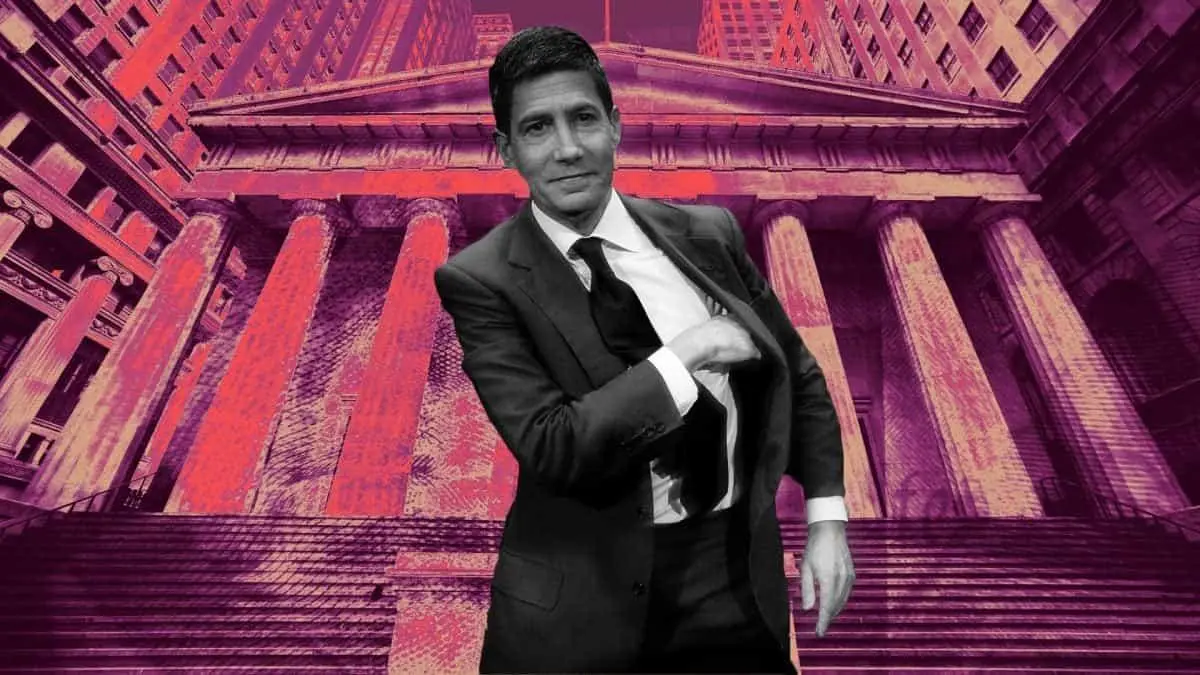
Bitcoin (BTC) traded below $65,000 on Wednesday as the Federal Reserve is widely expected to hold interest rates steady at 3.50% to 3.75% in Kevin Warsh's first meeting as Fed chair, with markets seeing little chance of a signal that cuts are imminent.
The foremost cryptocurrency was priced around $64,550, down nearly 2% on the day per The Block’s BTC price page, as investors stayed on the sidelines awaiting clarity on the U.S.-Iran agreement and the Fed's updated economic projections, due alongside the rate decision on Wednesday afternoon.
Expand Chart
"The key takeaway from the Fed meeting is that the market is set to get stability, not a pivot," said Lacie Zhang, a research analyst at Bitget Wallet. She said the Fed has not yet validated a broader liquidity rally, even as the Iran ceasefire and lower oil prices removed one source of inflation pressure.
Zhang said energy normalization may matter more than Fed policy in the near term, with WTI crude easing into the $80 to $85 range.
She placed bitcoin's near-term range at $64,000 to $68,000 if oil stays contained and Fed messaging remains neutral, with a hawkish surprise from Warsh capable of sending bitcoin back to $62,000 to $63,000.
Ahead of the meeting, spot bitcoin exchange-traded funds drew $10.1 million in net inflows on June 16, led by BlackRock's IBIT with $16.4 million, while spot ether (ETH) ETFs took in $9.6 million, led by BlackRock's ETHA with $17.3 million, according to SoSoValue.
Expand Chart
QCP Capital said Warsh arrived with a reputation as a dovish, rate-cut-inclined chair, but that reputation now collides with a shifting backdrop.
Headline inflation has climbed to 4.2% year-over-year, a level QCP described as the highest in more than three years, as the U.S.-Iran conflict pushed oil prices higher before the weekend's memorandum of understanding eased tensions.
QCP analysts argued that Chair Warsh must navigate that inflation print alongside a divided Fed board wary of the Trump administration's influence over monetary policy, calling Wednesday's meeting as much about Warsh securing buy-in from the board as it is about the rate decision itself.
The firm added that markets are pricing roughly half a percentage point of hikes for 2026 and will be watching the quarterly dot plot for confirmation that policy stays restrictive in the near term.
Kyle Rodda, senior financial market analyst at Capital.com, noted that Wall Street was de-risking heading into the decision, with crude oil falling on reports that the U.S. will lift sanctions on Iranian oil as part of the broader peace process.
Rodda also flagged that the central bank's vote split is expected to show significant division, and that the Fed is likely to remove an explicit easing bias from its statement, a shift he said could be reinforced by an updated Summary of Economic Projections showing higher inflation forecasts and a higher median dot.
Markets are pricing roughly a 60% chance of a rate hike by year-end, according to Rodda, who said the bigger story may end up being Warsh's first press conference rather than the rate decision itself.
In Rodda's view, markets are still trying to gauge whether Warsh, who campaigned for the chairmanship advocating lower rates, will instead govern as a policy hawk given rising inflation.
Bitfinex analysts said bitcoin's recovery, roughly 13.5% off its June 5 cycle low of $59,200, reflects seller exhaustion rather than fresh buying, and that the rally has stalled just below the $68,266 quarterly open.
"This bounce has been built on seller exhaustion and a macro reprieve, rather than any fresh demand," Bitfinex analysts told The Block, adding that the firm sees recent bounces as a relief rally inside a range rather than the start of a new trend.
The firm also pointed to a widening divergence beneath the price action. Analysts said open interest was flushed from an October 2025 peak above $90 billion to around $42.6 billion by the end of May and has not rebuilt through the bounce, while the open-interest-weighted funding rate has pivoted back into positive territory, signaling leveraged long positioning is re-engaging even as spot demand stays muted.
Touching on the largest BTC treasury firm, QCP said bitcoin's underperformance against a broader risk-on rally has been driven in part by concerns that Strategy may need to sell more bitcoin to fund its dividend payments, a pressure that intensified after the firm bought back $1.5 billion of its 2029 convertible senior notes.
Strategy has since raised roughly $200 million by selling MSTR shares and used the proceeds to keep buying bitcoin, extending its runway to fund STRC dividends to approximately 7.5 months before it runs out of cash.
Bitfinex flagged the same STRC mechanism as a real-time gauge of weakening corporate demand. STRC closed at $91.79 on June 16, a fresh low more than 8% below its $100 par, pushing its market yield to roughly 12.5% against an 11.5% coupon even after Strategy raised the rate.
Strategy added just 1,587 BTC last week, a $100 million purchase, which Bitfinex called a fraction of the multibillion-dollar raises the firm ran during its accumulation peak.
Expand Chart
Strategy's common stock, MSTR, traded at $122.81, down about 23% from its May high, as of Tuesday's close.
"The asset is stabilizing; the machinery that buys it is not," Bitfinex analysts told The Block, arguing the bounce in spot bitcoin is living on borrowed time without the corporate treasury and ETF complexes both firing.
QCP noted that as Strategy continues issuing shares to extend its runway, the broader macro optimism lifting other risk assets may eventually catch up to bitcoin, but for now, the overhang remains specific and unresolved.
Bitfinex stated that implied volatility has outpaced realized volatility as the structure has weakened, with one-week skew on Deribit surging to 30% and one-month skew climbing from 11% to 24% as traders piled into downside protection.
The firm called the move a market focused on tail-risk mitigation rather than directional conviction.
Bitfinex set its base case as a range between the $60,000 shelf and the $68,266 quarterly open, with confirmation of a breakout requiring sustained ETF inflows, STRC reclaiming its $100 par, open interest staying flat while price rises, and a close above the quarterly open.
The firm said a daily close back below $60,000 and the $59,200 cycle low would open room toward the aggregate realized price near $54,000, a move it said could be triggered by resumed ETF outflows, a further STRC slide, or a hawkish surprise from the Fed.
The setup follows a recent rally that analysts previously described as masking a market still waiting for real conviction, even as Hyperliquid (HYPE) set a fresh record high.
Bitwise Chief Investment Officer Matt Hougan argued the bitcoin bottom debate is the wrong question for long-term investors, pointing instead to whether the cycle top is still ahead. Meanwhile, K33 pointed to a record share of bitcoin supply held long-term as a sign the bear market may be nearing its end.
Amid the Fed decision and bitcoin debates, CryptoQuant analyst IT Tech said altcoin sell pressure on spot exchanges has reached a five-year extreme, with the cumulative buy/sell volume difference for tokens excluding bitcoin and ether falling to its deepest negative level since the firm began tracking data in 2020. The metric had nearly returned to flat in early 2025 before reversing sharply lower.
CryptoQuant founder Ki Young Ju emphasized that narrative-only altcoins are dead, not altcoins as a category. "The era of making money just by issuing a token is over," he wrote in a thread, arguing that surviving tokens need real businesses, real revenue, and alignment with broader financial trends rather than narrative alone.
Ju pointed to three categories he sees as durable: tokenized market layers tied to established internet companies, such as Binance's BNB and Telegram's GRAM, DeFi protocols with real revenue, like Hyperliquid, and projects aligned with trends, including stablecoins, tokenized stocks, and blockchain infrastructure for AI agents. He said altcoin market capitalization has barely grown beyond its 2021 high, with capital staying inside crypto rather than drawing in new money the way bitcoin has absorbed traditional finance liquidity.
"I came to crypto for jazz, but somewhere along the way, classical music started playing," Ju wrote, adding that crypto's shift toward institutional participation and regulation makes the market slower but bigger and safer.
Disclaimer: The Block is an independent media outlet that delivers news, research, and data. As of November 2023, Foresight Ventures is a majority investor of The Block. Foresight Ventures invests in other companies in the crypto space. Crypto exchange Bitget is an anchor LP for Foresight Ventures. The Block continues to operate independently to deliver objective, impactful, and timely information about the crypto industry. Here are our current financial disclosures.
© 2026 The Block. All Rights Reserved. This article is provided for informational purposes only. It is not offered or intended to be used as legal, tax, investment, financial, or other advice.
