
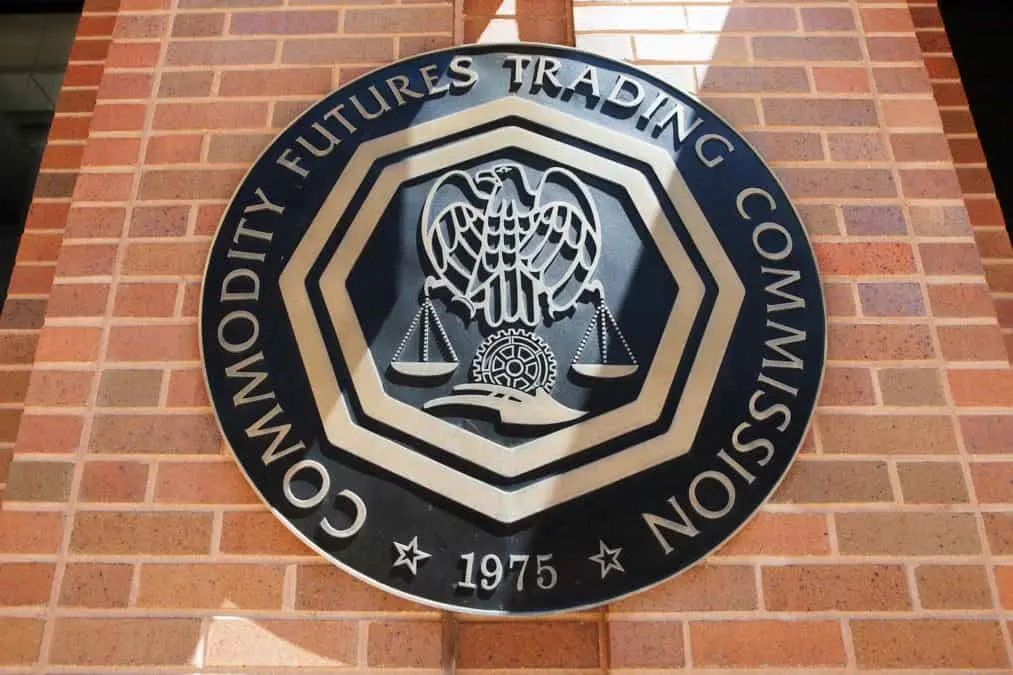
The world's largest derivatives marketplace, the CME Group, is officially taking the Commodity Futures Trading Commission to court over allowing perpetual futures to trade in the United States.
On Thursday, in the U.S. District Court for the District of Columbia, the Chicago Mercantile Exchange Inc., or CME, sued the CFTC and its chair, Michael Selig, accusing the agency of suddenly changing its course.
"With one stroke of his pen, the Chairman overrode Congress’s definition of the term 'swap' and circumvented the regulatory regime Congress required for that form of derivative," according to the complaint.
The CFTC approved the first perpetual futures for Kalshi and Coinbase last month, opening the door for those assets to trade in the U.S. for the first time.
Perpetuals, or perps, are a type of futures contract that don't have an expiration date and allow people to bet on the price movement of assets without owning them directly. They've become increasingly popular in crypto derivatives trading.
In the complaint, the CME Group says the new derivatives products would directly compete with its offerings and cause injury to CME. The CFTC is violating the Commodity Exchange Act when it approved the first set of perpetual futures last month, CME also argued.
"In short, by authorizing Kalshi and others to enter the derivatives marketplace by listing similar cryptocurrency perpetuals as futures, the CFTC ushered new entrants into CME’s retail futures market that seek to compete with CME for retail customers," CME said in the complaint.
The complaint also criticized the CFTC for not allowing public comments on Kalshi's application for perpetual futures.
CME CEO Terrence Duffy has been critical of perpetual futures, calling them a "disaster waiting to happen." On Wednesday, Duffy told CNBC that perpetual futures should be classified as swaps under the Dodd-Frank Act, a federal financial regulation law passed following the 2008 financial crisis.
Duffy also announced on Wednesday that he would be stepping down from his post in 2027.
A CFTC spokesperson pushed strongly against the lawsuit in a statement emailed to The Block.
"Rather than compete in the marketplace, the CME has decided to undertake lawfare against the agency and the Trump Administration’s pro-innovation agenda," the spokesperson said. "Incumbents fear the future and having to compete on a level playing field. We look forward to addressing their claims and dismissing this frivolous lawsuit."
On Thursday, in a post on X, the Hyperliquid Policy Center said the CME was trying to suppress competition. Hyperliquid is a decentralized perpetual futures exchange.
"Perpetual futures are the first genuinely new derivatives product to reach U.S.-regulated markets in over a decade," the center said. "More competition among exchanges is best for the people who actually use these markets. These products deserve clear rules."
Updated at 5:25 p.m. UTC to include comments
Disclaimer: The Block is an independent media outlet that delivers news, research, and data. As of November 2023, Foresight Ventures is a majority investor of The Block. Foresight Ventures invests in other companies in the crypto space. Crypto exchange Bitget is an anchor LP for Foresight Ventures. The Block continues to operate independently to deliver objective, impactful, and timely information about the crypto industry. Here are our current financial disclosures.
© 2026 The Block. All Rights Reserved. This article is provided for informational purposes only. It is not offered or intended to be used as legal, tax, investment, financial, or other advice.
